Vietnam Tax Residency: The 183-Day Test and the Ho Chi Minh City Tax Office
You are a Vietnam tax resident if you are present for 183 days or more in a calendar year, or in the 12 consecutive months from your first day. A regular residence, such as a fixed-term rented home, also counts. Residents are taxed on income inside and outside Vietnam. Non-residents are taxed on income arising in Vietnam.
On this page
Vietnam has two tests for tax residency, and meeting either one is enough. The first counts days. The second looks at your home.
A person who stays part of the year but signs a lease with a fixed term can still be a resident. With a regular residence and fewer than 183 days present, the person is a resident unless they prove tax residency in another country.
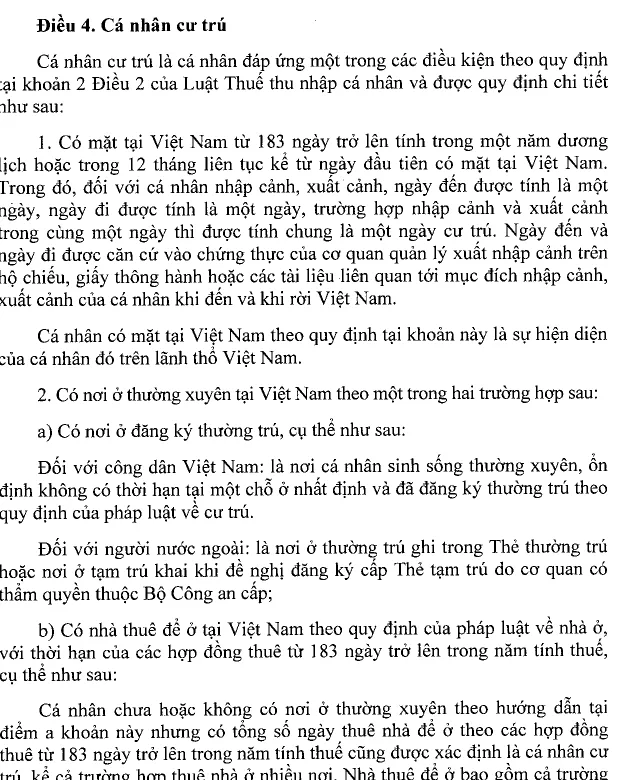
Cá nhân cư trú là người đáp ứng một trong các điều kiện sau đây: a) Có mặt tại Việt Nam từ 183 ngày trở lên tính trong 01 năm dương lịch hoặc tính theo 12 tháng liên tục kể từ ngày đầu tiên có mặt tại Việt Nam;
A resident individual is a person who meets one of the following conditions: present in Vietnam for 183 days or more within one calendar year, or for 12 consecutive months from the first day of presence in Vietnam.
Law 109/2025/QH15, Điều 2 khoản 2 điểm a
Test one: how Vietnam counts your days
Presence means your physical presence within Vietnamese territory. Decree 253/2026/NĐ-CP sets the counting rules for entry and exit:
- The day you arrive counts as one day.
- The day you leave counts as one day.
- Entering and leaving on the same day counts together as a single day.
- The dates come from the immigration authority’s certification on your passport, laissez-passer or other entry and exit documents.
For the border step, see Tan Son Nhat arrival and immigration.
Calendar year or 12 months from your first day
The test allows either window. Say you are present fewer than 183 days in a calendar year, but 183 days or more in the 12 months from your first day. You still meet the test. For that person the first tax period is the 12 consecutive months from the first day of presence.
Whole calendar year or only the days after the line
If you meet the resident conditions in a calendar year, the tax period is calculated by calendar year. The text gives no mid-year start date. It does not carve out the days after you cross the line.
The exception is the late arrival above, where the first period runs 12 months from your first day. Finalisation follows the same periods.
Test two: a regular residence in Vietnam
The second test ignores your day count and looks at your home. A regular residence includes a registered permanent residence, or a home rented to live in under a lease with a fixed term.
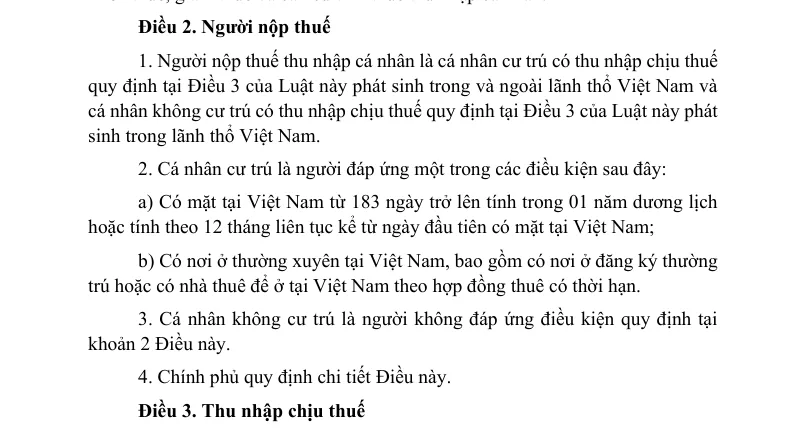
Có nơi ở thường xuyên tại Việt Nam, bao gồm có nơi ở đăng ký thường trú hoặc có nhà thuê để ở tại Việt Nam theo hợp đồng thuê có thời hạn.
A resident individual also has a regular residence in Vietnam, including a place of registered permanent residence or a home rented to live in under a lease with a fixed term.
Law 109/2025/QH15, Điều 2 khoản 2 điểm b
Which address counts as registered for a foreigner
For a foreigner, the registered residence is the permanent-residence address on the Permanent Residence Card. It can also be the temporary-residence address declared when applying for a Temporary Residence Card from the Ministry of Public Security.
Read Temporary Residence Card in Ho Chi Minh City for that card, and temporary residence registration for the separate duty to register where you sleep.
Rented homes: the lease days add up
A rented home counts when the lease terms total 183 days or more within the tax year. The text counts the term of the lease or leases, not how many of those days you were present. A person without a regular residence, but with 183 or more rented days across leases, is likewise a resident. That includes renting in more than one place.
The decree counts a hotel, guesthouse, motel or hostel, your workplace or an office as a rented home to live in. It makes no difference whether you rent it directly or your employer rents it for you.
Find an apartment in Ho Chi Minh City covers the lease rules.
Under the day threshold but with a home here
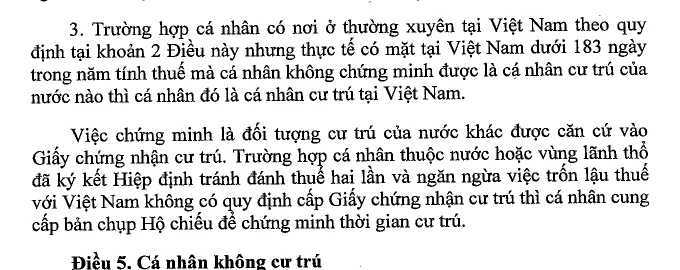
A person with a regular residence in Vietnam is a resident if present fewer than 183 days in the tax year. That holds when they cannot prove being a tax resident of any country. Proof of residence in another country is based on a Certificate of Residence.
If your country has a double-taxation agreement with Vietnam but issues no such certificate, you give a copy of your passport to prove the period you lived there.
Trường hợp cá nhân có nơi ở thường xuyên tại Việt Nam theo quy định tại khoản 2 Điều này nhưng thực tế có mặt tại Việt Nam dưới 183 ngày trong năm tính thuế mà cá nhân không chứng minh được là cá nhân cư trú của nước nào thì cá nhân đó là cá nhân cư trú tại Việt Nam.
A person with a regular residence in Vietnam who is actually present fewer than 183 days in the tax year and cannot prove being a tax resident of any country is a resident individual of Vietnam.
Decree 253/2026/NĐ-CP, Điều 4 khoản 3
Resident or non-resident: what changes
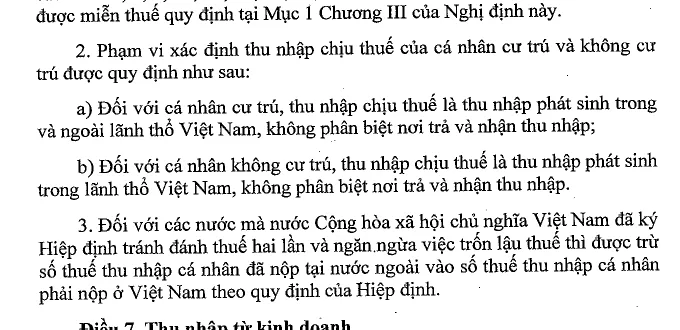
Anyone who does not meet the resident conditions is a non-resident. The split decides which income Vietnam taxes.
| Resident | Non-resident | |
|---|---|---|
| Taxable income | Arising inside and outside Vietnam | Arising within Vietnam |
| Where paid or received | Makes no difference | Makes no difference |
| Wage tax | Five progressive brackets | Flat 20% on wages for work in Vietnam |
Resident: the five wage brackets
A resident’s wage tax is the taxable income multiplied by the progressive rates. Taxable income is total wage income minus social, health and unemployment insurance contributions and the family deductions. Each rate applies to the part of income inside its bracket.
| Portion of taxable income per year (million VND) | Rate |
|---|---|
| Up to 120 | 5% |
| Over 120 to 360 | 10% |
| Over 360 to 720 | 20% |
| Over 720 to 1,200 | 30% |
| Over 1,200 | 35% |
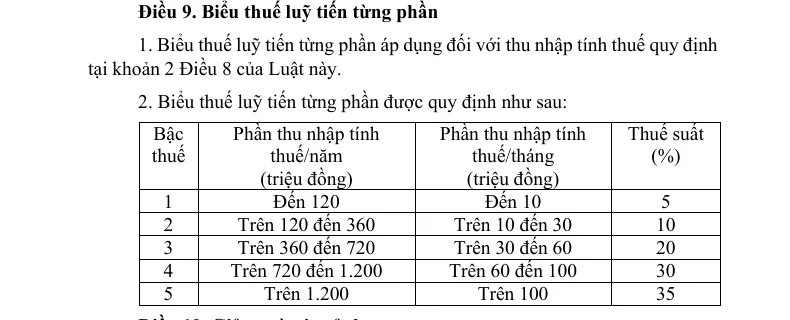
The family deduction is the amount taken off wage income before the brackets apply. It is VND 15.5 million a month (VND 186 million a year) for you and VND 6.2 million a month for each dependant. It applies to a resident only: a non-resident pays a flat rate on gross pay for work in Vietnam.
The Government can ask the National Assembly Standing Committee to reset the amounts as prices and incomes change.
The law taxes other income besides wages, starting with business income. This page does not cover those rates. For a resident paid from abroad, see Vietnam income tax for remote workers.
Non-resident: 20% on wages for work in Vietnam
A non-resident’s wage tax is the total wages received for work performed in Vietnam, multiplied by 20%, regardless of where the income is paid.
Thuế thu nhập cá nhân đối với thu nhập từ tiền lương, tiền công của cá nhân không cư trú được xác định bằng tổng số tiền lương, tiền công mà cá nhân không … cư trú nhận được do thực hiện công việc tại Việt Nam nhân (x) với thuế suất 20%, không phân biệt nơi trả thu nhập.
Tax on a non-resident’s wages is the total wages received for work performed in Vietnam, multiplied by 20%, regardless of where the income is paid.
Law 109/2025/QH15, Điều 21
If a non-resident works in Vietnam and abroad at the same time and the Vietnam part of pay cannot be separated, the decree sets a formula. For a foreign individual present in Vietnam it is days present in Vietnam divided by 365, multiplied by global wage income before tax, plus other taxable benefits arising in Vietnam.
Tax paid abroad, and which law applies
Tax already paid abroad is credited against Vietnamese personal income tax for countries that signed a double-taxation agreement with Vietnam. The credit works as that agreement provides. This page does not cover any country’s treaty terms, so read your own country’s agreement.
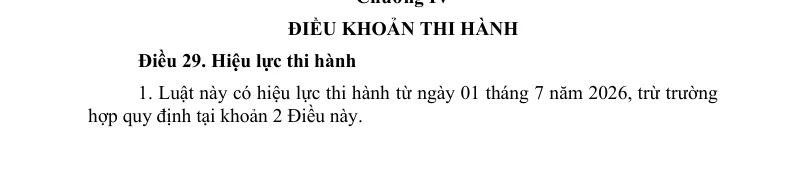
Law 109/2025/QH15 takes effect from 1 July 2026. Its provisions on a resident’s income from business and from wages and salaries apply from the 2026 tax period.
The older Law 04/2007/QH12 ceases to be effective from the date the new Law takes effect. Its resident wage and business provisions cease from the 2026 tax period.
Getting a tax code and reaching the Ho Chi Minh City tax office
A foreign individual with income arising in Vietnam is a taxpayer under the tax-administration law. If you register directly with the tax authority, first-time registration is due within 10 working days of the date your personal income tax obligation arises.
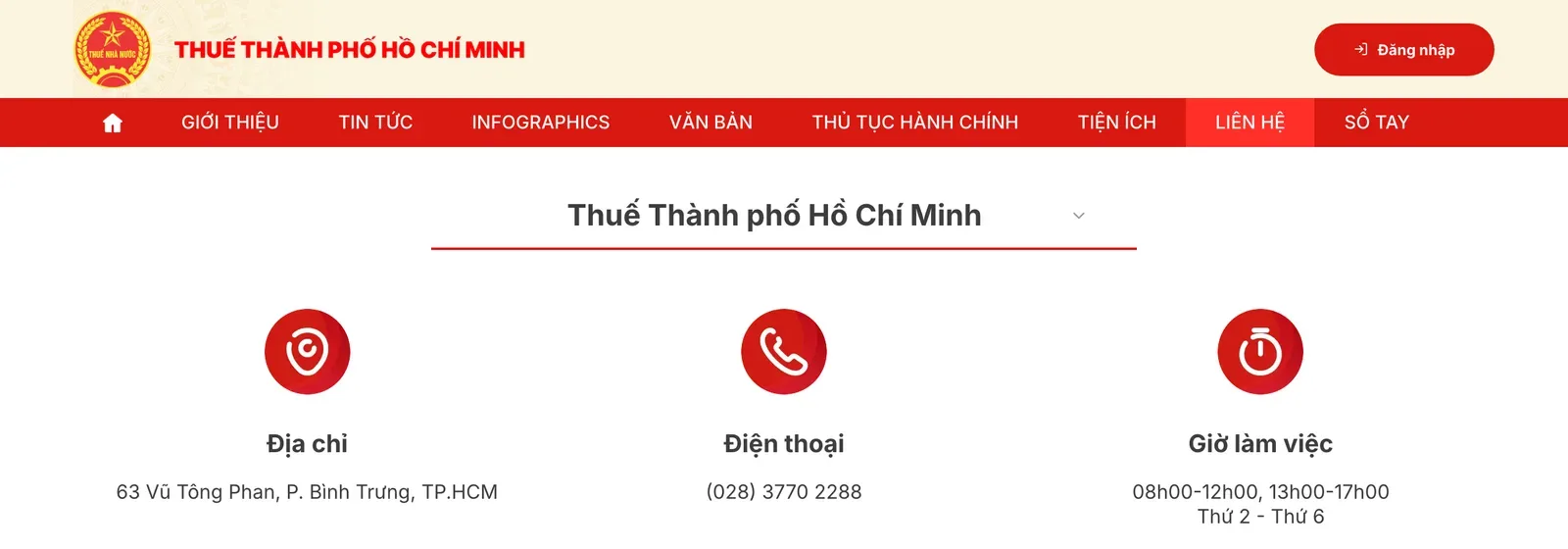
The city’s tax authority is Thue Thanh pho Ho Chi Minh (Thuế Thành phố Hồ Chí Minh). Its contact page gives 63 Vu Tong Phan, Binh Trung Ward. It shows the telephone number (028) 3770 2288 and the working hours 08:00-12:00 and 13:00-17:00, Monday to Friday.

Older sources call it the Cuc Thue or Sub-department of Taxation Region II. From 1 July 2025 the authority was formed by merging that sub-department with two others from the former Ba Ria-Vung Tau and Binh Duong areas. It has 22 departments and 29 local tax offices. Twenty of those offices manage the wards and communes of Ho Chi Minh City.

The legacy tphcm.gdt.gov.vn portal still prints the address as Ward An Phu, District 2. Resolution 1685/NQ-UBTVQH15 merged Binh Trung Dong, Binh Trung Tay and part of old An Phu into the new Binh Trung Ward. The Ho Chi Minh City address format guide explains the new ward names.
The official pages checked give no ward-by-ward list of the 20 offices. The menu of hcmtax.gov.vn has no ward lookup either. Use the appointment-booking function on its utilities page, or call the head office on (028) 3770 2288 and give your current ward name.
The office that handles a resident’s quarterly return for pay from abroad is the one that directly manages where the person lives. So your ward is the key detail: keep your rental contract’s address ready. Use the current address from the contact page, not the older one on the legacy portal.
The annual finalisation deadline for wage earners who file directly is the last day of the fourth month after the calendar year ends. For a late arrival whose first period is 12 months, it is the fourth month after the month that completes the 12 months.
For the full filing process of someone paid from abroad, read Vietnam income tax for remote workers.
Check your own days, home and lease against the rules above. Keep your passport stamps and lease contract: they are the documents the rules rely on.
More money guides: opening a bank account, sending money to and from Vietnam, cost of living and the money hub.
Photos and clips uploaded to Google Maps (Ho Chi Minh City Tax Department on Google Maps (opens in a new tab)) by Long Hoang (Kenzo), To Loi.
Not confirmed: Which of the 20 local tax offices covers your ward: the official pages checked give no ward list. Book an appointment on the official site or call the head office on (028) 3770 2288 and give your ward name.
Common questions
How many days in Vietnam make me a tax resident?
183 days or more within one calendar year, or within the 12 consecutive months counted from your first day of presence in Vietnam.
How are days counted when I fly in and out of Tan Son Nhat?
The day of arrival counts as one day and the day of departure counts as one day. Entry and exit on the same day count together as a single day. The dates come from the immigration authority's certification on your passport or travel document.
Does renting an apartment in Saigon make me a resident if I travel a lot?
A home rented to live in under a lease with a fixed term counts as a regular residence. Lease days across several leases and places add up to 183 days or more in the tax year. If you are present fewer days, the next question applies.
Am I a resident with a home here and fewer than 183 days present?
With a regular residence and fewer than 183 days present in the tax year, you are a resident if you cannot prove being a tax resident of any country. The proof is based on a Certificate of Residence.
What rate applies to my wages if I am a non-resident?
20% of the total wages you receive for work performed in Vietnam, regardless of where the income is paid.
What rates apply to a resident's wages?
Five brackets from 5% to 35% on taxable income from wages and salaries. Taxable income is wages minus insurance contributions and the family deductions. The deduction is VND 15.5 million a month for you and VND 6.2 million for each dependant.
If I pass the 183-day line late in the year, is the whole year a resident year?
The tax period for a resident is the calendar year. The rule gives no mid-year start date. A person present fewer than 183 days in the calendar year but 183 or more in 12 months from the first day gets a first period of those 12 months.
How do I find the tax office for my ward?
The official hcmtax.gov.vn pages checked give the head office and the count of 20 ward offices, with no ward-by-ward list. The site offers appointment booking, and the head office answers on (028) 3770 2288.
Is tax paid in another country credited in Vietnam?
For countries that signed a double-taxation agreement with Vietnam, tax already paid abroad is credited against the tax payable in Vietnam, as the agreement provides.
When must I register for a tax code?
An individual who registers directly with the tax authority has 10 working days from the date the personal income tax obligation arises.
Where is the Ho Chi Minh City tax authority?
Its own contact page gives 63 Vu Tong Phan, Binh Trung Ward. The telephone shown is (028) 3770 2288, and the hours are 08:00-12:00 and 13:00-17:00, Monday to Friday.
Read next
General information checked against the sources listed above, not legal advice for your situation. Rules and office practice change; confirm with the immigration office or a licensed adviser before you act. See how guides are checked.
Spotted an error? Report it.