Find an Apartment in Ho Chi Minh City: Rent, Deposit, Scams
Do not transfer a deposit before you have been to the place and met the owner. Ask for proof of ownership and sign a written contract. A first-hand one-bedroom runs VND 7,000,000 to 22,000,000 a month by area, and VND 9,000,000 to 27,000,000 second-hand, on statistics compiled in January 2026; deposits are 1-2 months.
On this page
- Steps to rent an apartment in Ho Chi Minh City
- Where to look for listings
- What rent to expect
- Read the ward names on listings
- What to check at the viewing
- Contract and deposit
- Ending the lease, rent changes and subletting
- Bills the rent does not cover
- Scams the police warn about
- Register your stay with the ward police
- Step by step
- Common questions
Ho Chi Minh City Police warned on 7 September 2025 against sending a deposit before you have been to the place and met the owner. The warning, reported by VOH, covers cheap fake listings, fake brokers and fake contracts. The steps below keep your money out of that trap.
Steps to rent an apartment in Ho Chi Minh City
- Search the listing sites and message the poster. Renters usually want the rent, floor area, condition, service fees and amenities stated.
- Go to the place and meet the owner before you pay anything.
- Ask for the ownership certificate or another paper proving the right to lease, and check the landlord’s personal details.
- Check the home against the housing-law conditions in the viewing checklist below.
- Sign a written contract that states the lease term and how rent is paid.
- Expect a deposit of 1-2 months; AffordWhere does not say whether that is for first-hand or second-hand rent.
- Have your stay declared to the ward police through the accommodation.

Where to look for listings
Batdongsan.com.vn and Nha Tot both carry rental listings. Nha Tot describes itself as a leading platform for rental listings, especially room rentals.
Many social-media groups also carry rooms for rent, and brokers use them to reach clients. Apply the same steps to every poster, in a group or on a platform.
A District 10 apartment manager told VietNamNet that scammers give many reasons why you cannot come to view, but ask for a deposit of VND 500,000 to 1 million first. Treat any request to pay before viewing as a stop sign.
What rent to expect
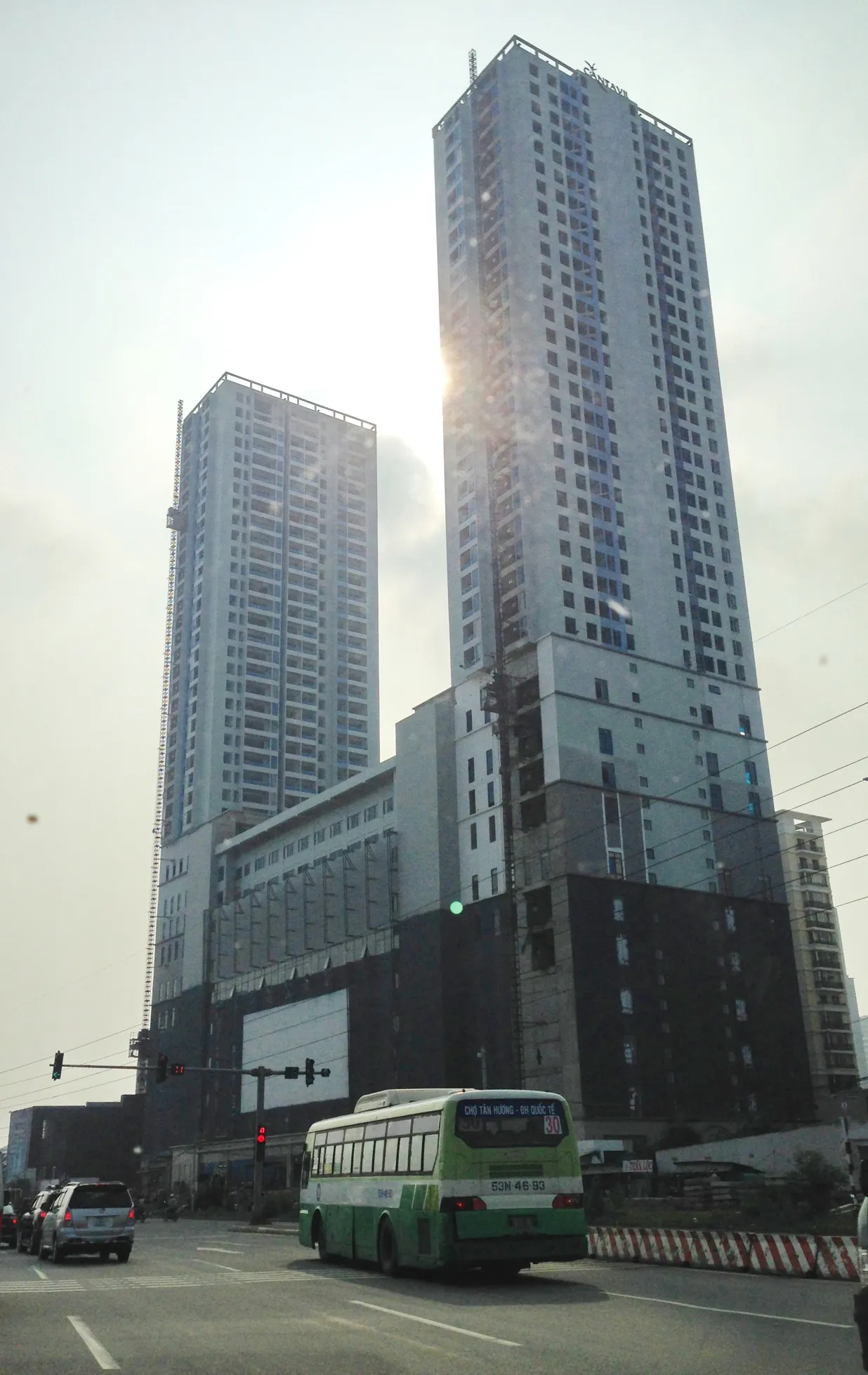
On statistics compiled in January 2026, a first-hand one-bedroom is VND 7,000,000 to 22,000,000 a month by area. The city-wide second-hand range, typical for expats, is VND 9,000,000 to 27,000,000 for one bedroom and VND 15,000,000 to 42,000,000 for two. First-hand contracts come straight from the landlord or housing company; second-hand contracts are sublets and usually cost more.
| Area | 1-bed first-hand | 1-bed second-hand | 2-bed second-hand |
|---|---|---|---|
| District 1 | VND 12,000,000 to 22,000,000 | VND 15,000,000 to 27,000,000 | VND 25,000,000 to 42,000,000 |
| District 2 (Thao Dien) | VND 10,000,000 to 18,000,000 | VND 12,000,000 to 22,000,000 | VND 20,000,000 to 34,000,000 |
| District 3 | VND 8,000,000 to 15,000,000 | VND 10,000,000 to 18,000,000 | VND 17,000,000 to 29,000,000 |
| District 7 (Phu My Hung) | VND 9,000,000 to 16,000,000 | VND 11,000,000 to 19,000,000 | VND 18,000,000 to 31,000,000 |
| Binh Thanh | VND 7,000,000 to 13,000,000 | VND 9,000,000 to 16,000,000 | VND 15,000,000 to 27,000,000 |
These are area ranges from statistics compiled in January 2026. Thuecanho123 is newer but measures something else: the average asking price of live listings in October 2026. It gives a one-bedroom at 7 to 20 million VND in the former District 1 and 7.5 to 13 million VND in District 7.
Use AffordWhere for the area as a whole and listing averages to test one building’s price. For what each area is like, read where to live in Ho Chi Minh City; for the other monthly costs, read the cost of living guide. To compare two popular areas head to head, see District 2 vs District 7.
Read the ward names on listings
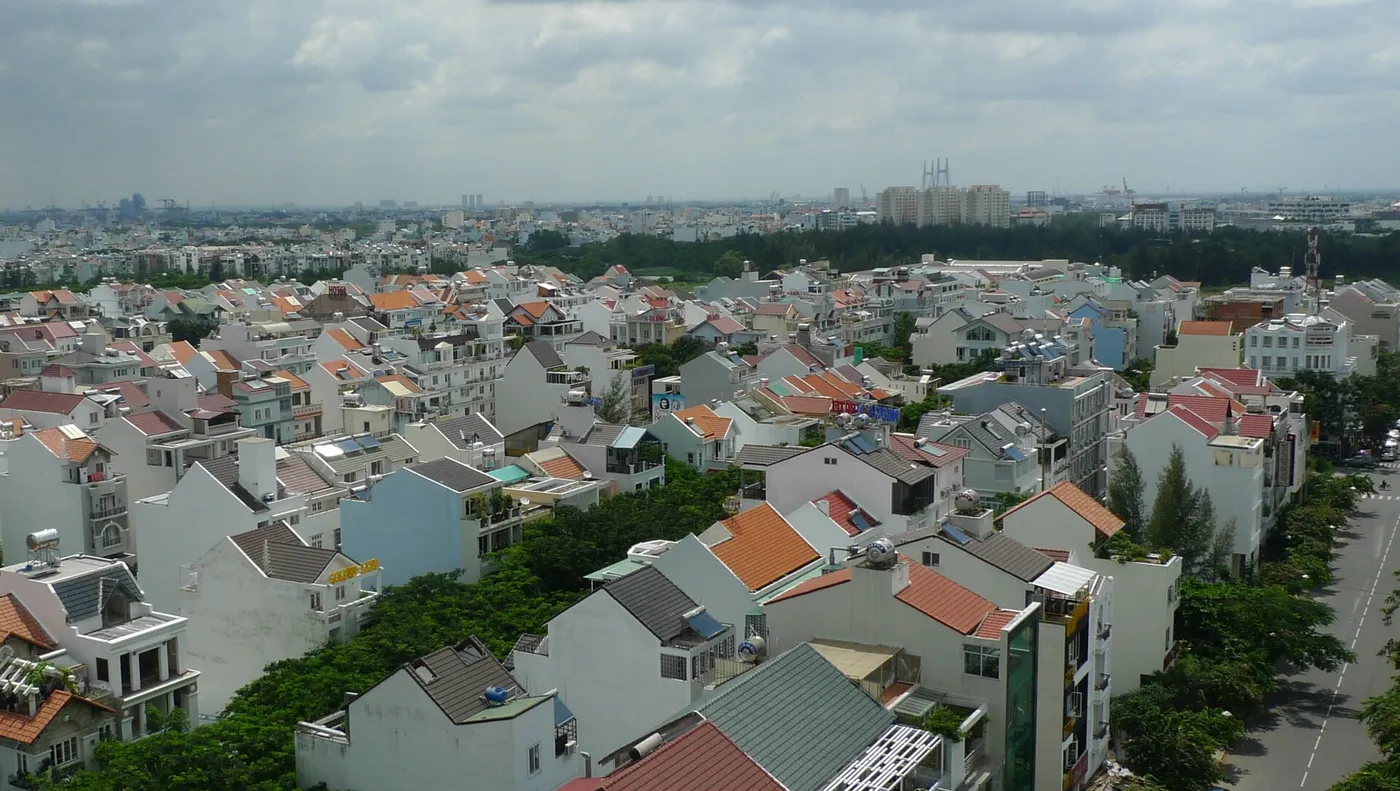
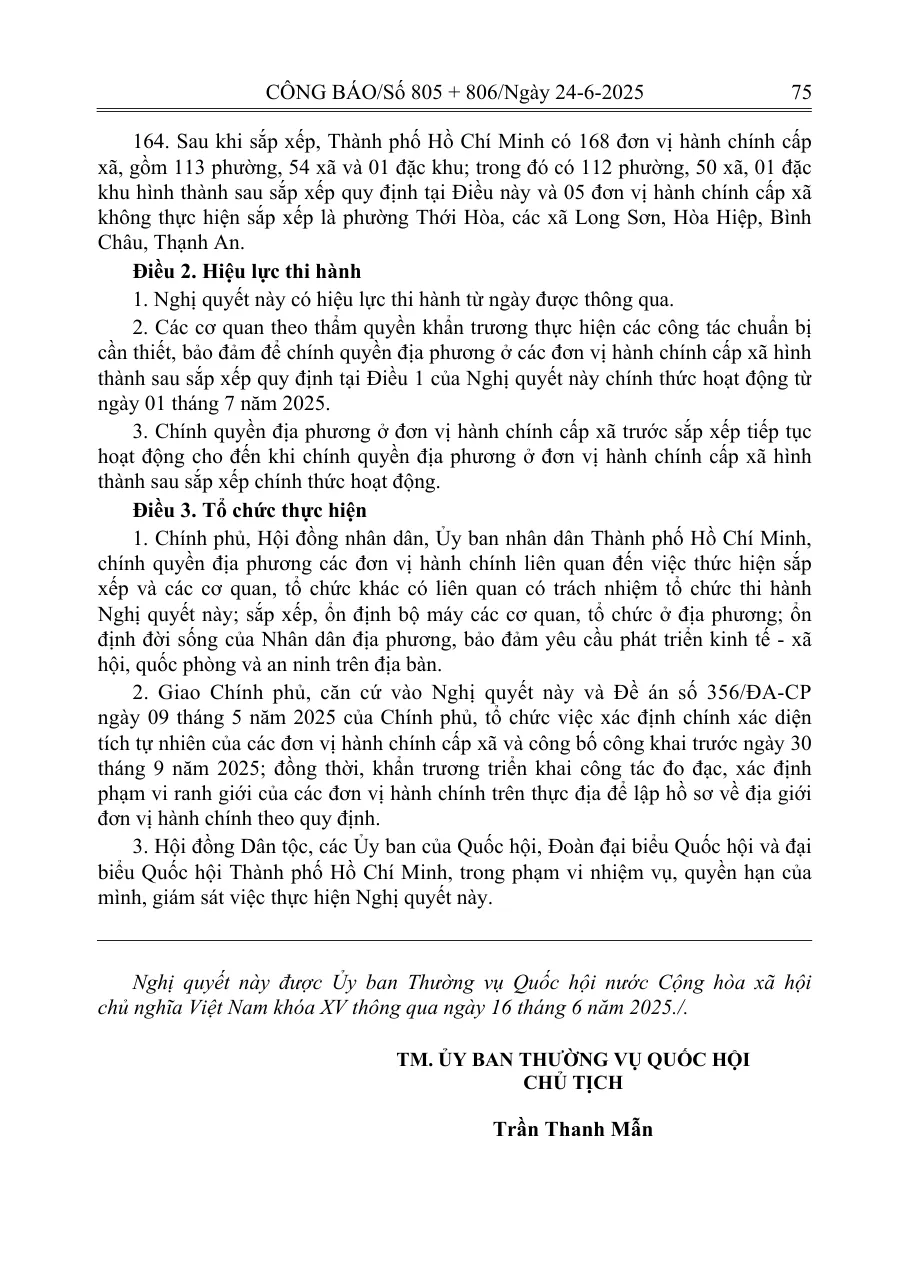
The district level stopped operating on 1 July 2025. The city now has 168 commune-level units: 113 wards, 54 communes and 1 special zone. AffordWhere’s rent tables still use the old district names, such as District 1 and District 7.
Match the ward on the listing to the new name:
- The former Thao Dien ward was merged into the new An Khanh ward.
- The former Tan Phu ward of District 7 and the rest of Phu My ward became Tan My ward.
- The former Ben Nghe ward, with parts of Da Kao and Nguyen Thai Binh, became Sai Gon ward.
The address format guide shows how to write the new address on forms.
What to check at the viewing
Housing law sets conditions for a home that is leased out. The first is quality and safety.
Trường hợp nhà ở cho thuê thì ngoài điều kiện quy định tại các điểm c, d và đ khoản 1 Điều này, nhà ở còn phải bảo đảm chất lượng, an toàn cho bên thuê nhà ở, có đầy đủ hệ thống điện, cấp nước, thoát nước, bảo đảm vệ sinh môi trường, trừ trường hợp các bên có thỏa thuận khác.
A leased home must also ensure quality and safety for the tenant, have a full electricity, water-supply and drainage system, and ensure environmental hygiene, unless the parties agree otherwise. Law on Housing 27/2023/QH15, Điều 160 khoản 3
Use these as your checklist:
- The owner is in front of you and shows the ownership certificate (Giấy chứng nhận) or another paper proving the right to lease. Housing law does not make a certificate mandatory for a lease, though it is mandatory for a sale.
- Electricity, water supply and drainage all work.
- The home is still within its ownership term, if the ownership is time-limited.
- The home has not been seized to enforce a court judgment or a binding administrative decision, and no court or agency has frozen it with a temporary or preventive order.
- The home is not under a land-recovery decision or a notice of clearance or demolition.
Contract and deposit
A housing contract must be made in writing. For a lease it lists:
- the parties’ full names and addresses;
- the price, if the contract sets one, and how and when rent is paid;
- the lease term;
- each side’s rights and obligations;
- the effective date, the signing date and the parties’ signatures.
The landlord and tenant agree the term, the rent and whether rent is paid periodically or in one payment. A lease does not need notarisation, unless the parties want it.
Deposits are usually 1-2 months, typically 2 months’ rent. In law, a deposit secures the conclusion or the performance of a contract. Who keeps it depends on who refuses the contract.
nếu bên đặt cọc từ chối việc giao kết, thực hiện hợp đồng thì tài sản đặt cọc thuộc về bên nhận đặt cọc
If the depositor refuses to conclude or perform the contract, the deposited property belongs to the deposit-receiver.
nếu bên nhận đặt cọc từ chối việc giao kết, thực hiện hợp đồng thì phải trả cho bên đặt cọc tài sản đặt cọc và một khoản tiền tương đương giá trị tài sản đặt cọc, trừ trường hợp có thoả thuận khác
If the deposit-receiver refuses to conclude or perform the contract, it must return the deposited property plus an amount equal to its value, unless otherwise agreed. Civil Code 91/2015/QH13, Điều 328 khoản 2
If the contract is concluded and performed, the deposit is returned or deducted to perform the obligation to pay. At the end you return the home in a condition similar to when you received it, except for natural wear and tear.
Ending the lease, rent changes and subletting
The landlord may not end the lease on their own during the agreed term, except in the cases the law lists. Those cases include rent unpaid in full for 3 months or more and subletting without the landlord’s consent.
You may end the lease on your own if the landlord does not repair severe damage or raises the rent unreasonably. Give at least 30 days’ notice, unless the parties agreed otherwise.
- If the owner sells the home while your term runs, you may keep leasing until the term ends.
- You may sublet if the landlord agrees.
- If the contract fixes no term, it ends 90 days after the landlord notifies you of the termination.
- The limitation period for a court request on a contract dispute is 3 years.

Bills the rent does not cover
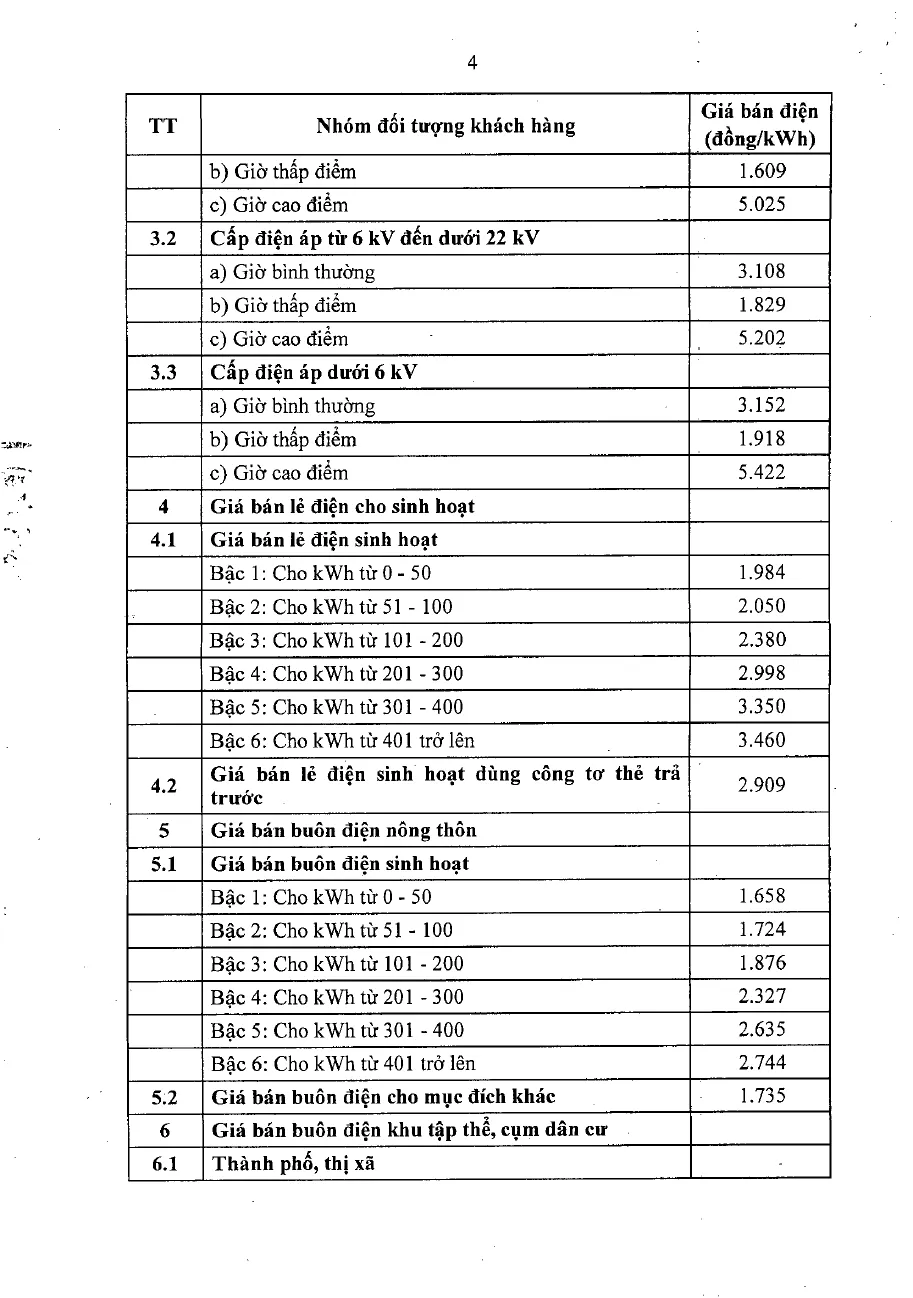
Household electricity is priced in six tiers: VND 1,984 per kWh for 0-50 kWh up to VND 3,460 per kWh from 401 kWh. These prices do not include value-added tax.
Household water is VND 6,700 per cubic metre within a quota of 4 cubic metres per person a month, before 5% VAT, in March 2025 reporting. The bill adds a drainage and wastewater charge of 30% of the water price and 8% VAT on it.
A landlord who charges a tenant more than the regulated price for household electricity is fined VND 20,000,000 to 30,000,000. The landlord must also refund the excess plus interest as agreed in the contract.
Who signs the electricity contract depends on the lease:
- A household tenant: the landlord signs directly, or authorises the tenant household to sign.
- A student or worker on a lease of 12 months or more with residence registration: the landlord may sign directly, committing to pay.
- A lease under 12 months where the landlord cannot fully declare the occupants: all metered use is billed at tier 3, the 101-200 kWh price.
Scams the police warn about
City Police listed these patterns in September 2025.
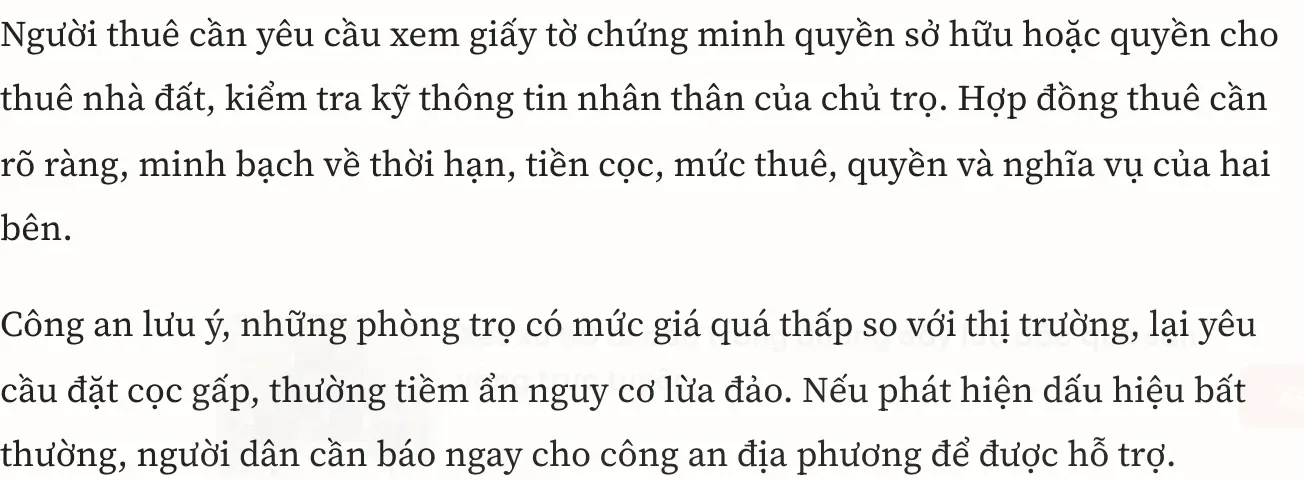
- A listing with photos of a clean room at a rent far below the market, and a request to transfer the deposit online. On arrival the room does not match the photos, or the address does not exist.
- A fake owner or broker who shows you a room and cuts contact once the deposit is paid.
- A room rented and sub-let to several people at once, who all pay a deposit.
- Fake contracts with forged signatures and seals, sometimes with an added management fee.
A price far below the market combined with an urgent deposit often signals a scam, and signs of trouble go to the local police. VietNamNet reported a renter who paid a broker’s account; the real owner had received no money or information.
Do not leave your passport with a landlord as a guarantee. The UK government gives this advice to its travellers; it is travel advice, not a Vietnamese rule. Showing the passport for the stay declaration is different.
Register your stay with the ward police
A foreigner staying temporarily must have the stay declared through the person who runs the accommodation, to the ward police. The accommodation asks to see your passport and residence papers first.
Declaration is electronic or on a paper form, and a paper form goes to the police within 12 hours of your arrival. The person who files is the owner, the legal representative or someone they authorise, not you. If the landlord is not on site, the person they authorise files.
A foreigner who does not hand over the passport or residence papers is fined under the same clause as the accommodation, with a range of VND 3,000,000 to 5,000,000. The temporary residence registration guide has the steps.

Step by step
- Meet the ownerGo to the place and meet the owner before you pay anything.
- Ask for proofAsk for the ownership certificate (Giấy chứng nhận) or another paper proving the right to lease, and check the landlord's personal details.
- Check the homeCheck the home has electricity, water supply and drainage and is not distrained or under a clearance notice.
- Sign in writingSign a written contract that states the lease term and how rent is paid.
- Declare your stayThe accommodation declares your stay to the ward police after you show your passport and residence papers.
Not confirmed: No rent survey by ward was found: AffordWhere's ranges are area figures compiled in January 2026, and the October 2026 listing averages are asking prices. Water is VND 6,700 per cubic metre within quota in March 2025 reporting; confirm the current price on your first bill.
Common questions
Does a rental contract have to be in writing?
A housing contract must be made in writing, and it states the parties, the lease term, how rent is paid and each side's rights and duties.
Do I lose my deposit if I back out?
If the depositor refuses to conclude or perform the contract, the deposited property belongs to the deposit-receiver.
What if the landlord backs out?
The landlord must return the deposit plus an amount equal to its value, unless the two sides agreed otherwise.
How big is the deposit?
Deposits are usually 1-2 months, typically 2 months' rent.
How much is a one-bedroom in Ho Chi Minh City?
A first-hand one-bedroom runs VND 7,000,000 to 22,000,000 a month across five areas, and VND 9,000,000 to 27,000,000 second-hand (sublets), on statistics compiled in January 2026. Thuecanho123's October 2026 listing averages run 7 to 20 million VND in the former District 1 and 7.5 to 13 million VND in District 7.
Does a lease have to be notarised?
Notarisation or certification of a lease is not required, unless the parties want it.
How much notice do I give to end a lease?
The party ending the lease on its own must give at least 30 days' notice, unless the parties agreed otherwise.
Can my landlord charge more than the regulated electricity price?
A landlord who does is fined VND 20,000,000 to 30,000,000 and must refund the excess.
Should I hand my passport to a landlord as a guarantee?
No. The UK government advises its travellers not to give a passport to a landlord as a guarantee. This is UK travel advice, not a Vietnamese rule. Show the passport for the stay declaration, then take it back.
Is it safe to pay a deposit before I view the place?
City Police advise against transferring a deposit before you have been to the place and met the owner in person.
Read next
General information checked against the sources listed above, not legal advice for your situation. Rules and office practice change; confirm with the immigration office or a licensed adviser before you act. See how guides are checked.
Spotted an error? Report it.