Dengue Fever in Ho Chi Minh City: Signs, Hospital, Vaccine
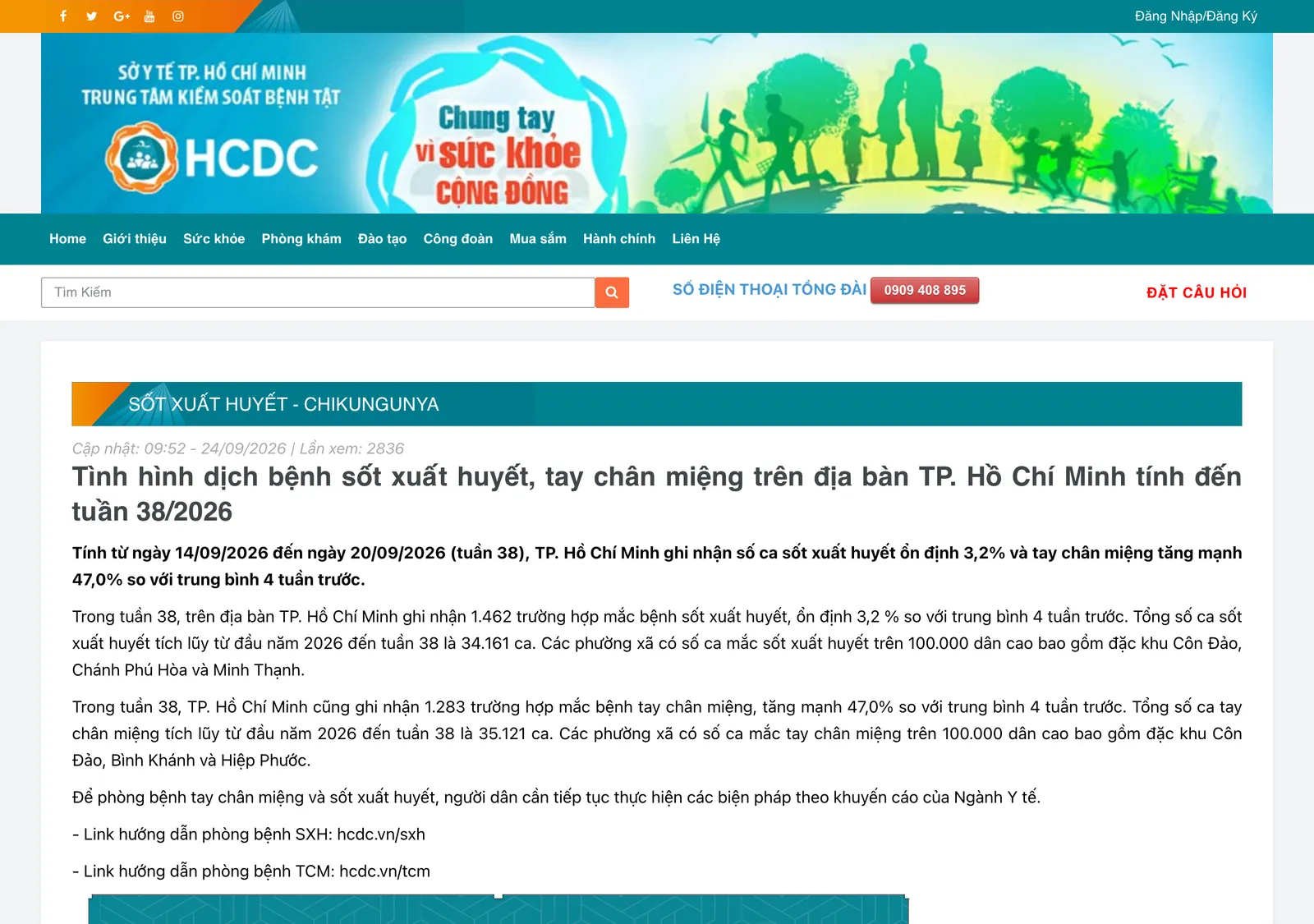
Ho Chi Minh City recorded 1,462 dengue cases in week 38 of 2026 and 34,161 since the start of the year. The danger stage falls between day 3 and day 7, as the fever drops. Go to a medical facility at once for heavy abdominal pain, repeated vomiting or bleeding.
Medical information. This guide is general information, not a substitute for professional medical advice. In an emergency, call 115 first.
On this page
The danger in dengue starts when the fever drops. The danger stage usually falls between day 3 and day 7 of the illness. Do not relax when the patient starts to cool down.
Dengue in Ho Chi Minh City in 2026
The city health agency, HCDC, publishes a weekly bulletin. Week 38 ran from 14 to 20 September 2026.
| Count | Cases |
|---|---|
| Week 35 | 1,256 |
| Week 36 | 1,338 |
| Week 38 | 1,462 |
| Total since the start of 2026 | 34,161 |
Cases crept up from week 35 to week 38, though HCDC rates week 38 as stable against the previous 4-week average. Week 38 is the newest bulletin on the HCDC home page on 15 October. Relative to population, the most cases came from Con Dao special zone, Chanh Phu Hoa and Minh Thanh.
HCDC’s switchboard is 0909 408 895. The rainy season guide covers the wet months.
Symptoms
Symptoms usually begin 4-10 days after infection and last 2-7 days. They include high fever, severe headache, pain behind the eyes, muscle and joint pains, nausea, vomiting, swollen glands and rash.
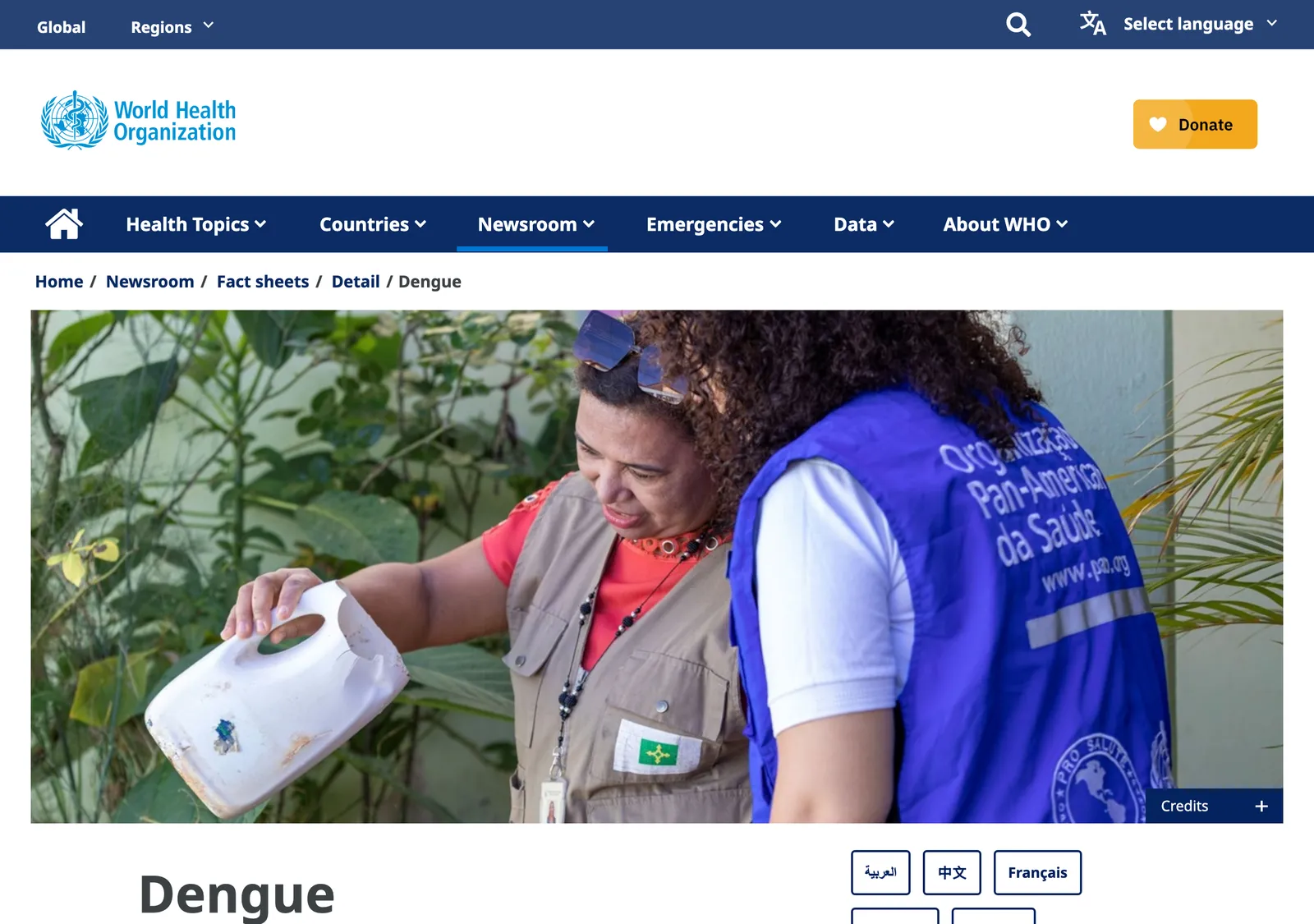
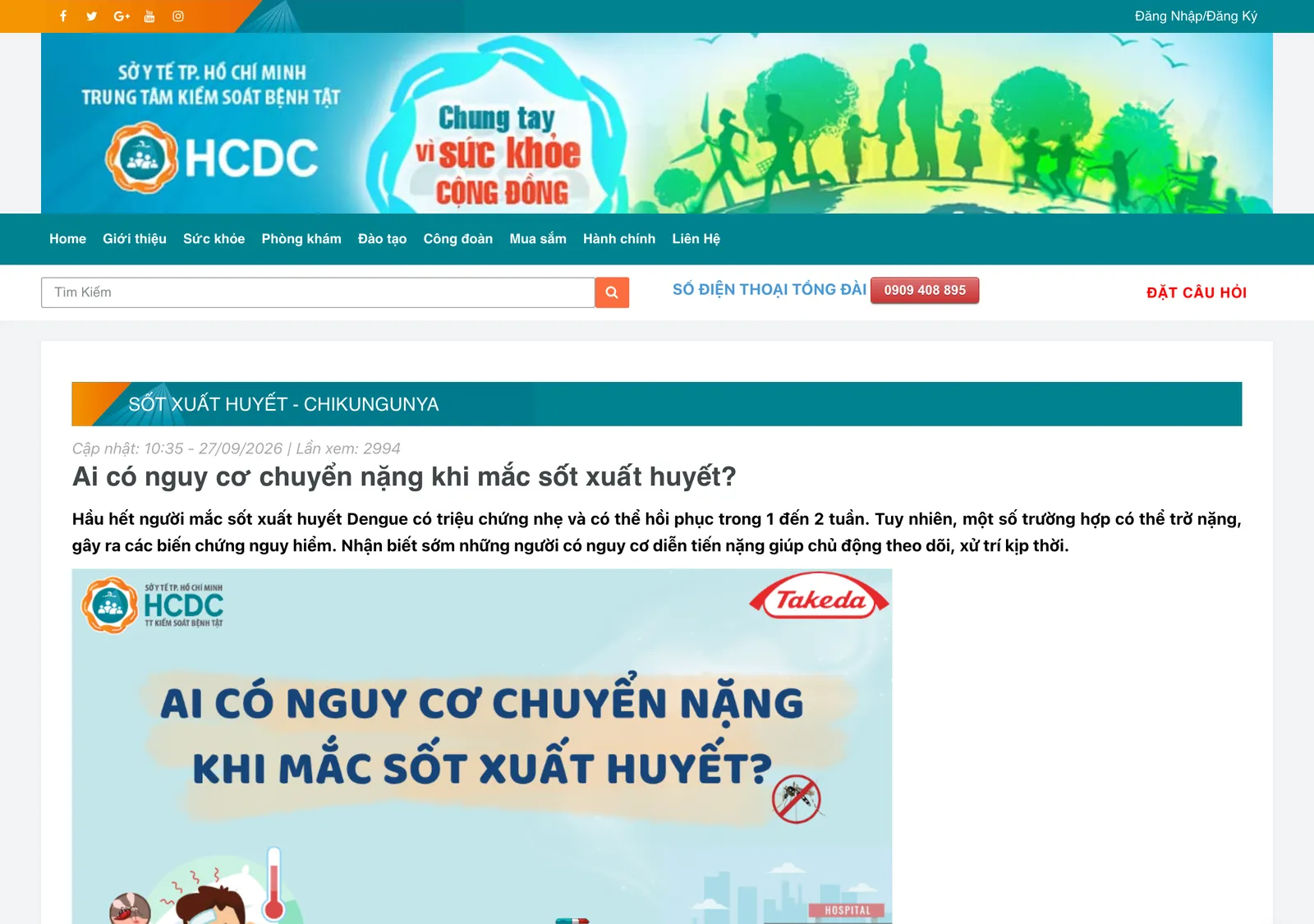
Most people with dengue have mild symptoms and recover within 1 to 2 weeks. The disease runs through three stages: fever, danger and recovery. About 5% of infected people go on to severe dengue.
When to go to a medical facility
Go at once if any one of these signs appears, whether or not you are in a risk group:
- heavy, continuous abdominal pain, especially on the right;
- heavy or continuous vomiting;
- exhaustion, drowsiness, restlessness or a change in alertness;
- cold hands and feet, pale or cold clammy skin, or a mottled purple pattern;
- little or no urine for many hours;
- unusual bleeding: nosebleed, bleeding gums, many red spots or bruises, vomiting blood, black or bloody stool, blood in urine or abnormal vaginal bleeding.
Severe symptoms often come after the fever has gone away. Call 115 for a medical emergency. Other lines are in the emergency numbers guide; hospitals with round-the-clock emergency care are in the hospitals guide.
Who is at higher risk
These groups are at higher risk of severe dengue:
- children, especially infants under 1 year;
- pregnant women;
- people aged 60 and over;
- people with chronic disease such as heart, kidney or liver disease, asthma, poorly controlled COPD, diabetes or thalassaemia;
- anyone who had dengue before and is infected by a different virus type.
Care at home
There is no specific treatment for dengue, although pain can be managed with paracetamol (acetaminophen). Rest, drink plenty of liquids and use paracetamol for pain.
Avoid ibuprofen and aspirin, which can increase the risk of bleeding. Watch for severe symptoms and contact a doctor as soon as possible if you notice any. The pharmacy guide covers where to buy paracetamol.
Prevent bites
The mosquitoes that spread dengue are active during the day. Use mosquito repellent containing DEET, Picaridin or IR3535.
Cover, empty and clean water storage containers weekly to stop mosquitoes breeding.
Dengue vaccine (Qdenga): price and where
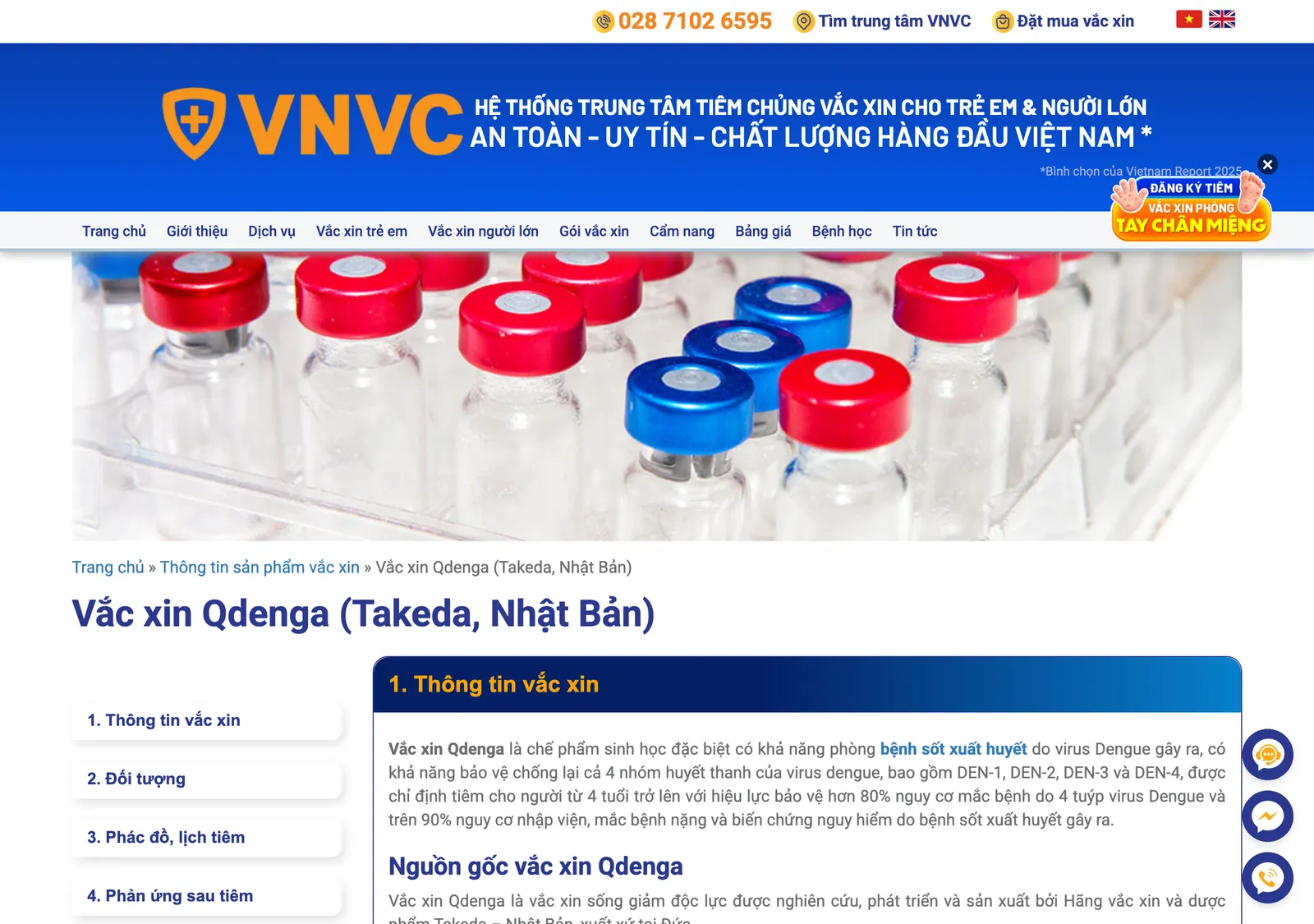
Qdenga costs VND 1,290,000 per dose on the VNVC list. Long Chau charges the same VND 1,290,000. VNVC’s September 2026 list applies chain-wide from 26 September 2026 until further notice.
| Provider | Price per dose | Phone |
|---|---|---|
| VNVC (vaccination centre chain) | VND 1,290,000 | 028 7102 6595 |
| Long Chau (pharmacy chain’s vaccination centres) | VND 1,290,000 | 1800 6928 |
VNVC prices include pre-vaccination screening with a doctor, consultation and medical documentation. The VNVC schedule for people aged 4 and over is 2 doses, the second 3 months after the first. It is given under the skin, preferably in the upper arm.
Qdenga is a live attenuated vaccine (made from a weakened virus) and is contraindicated in pregnancy and during breastfeeding.
Who should take it: VNVC vaccinates anyone from age 4. WHO’s recommendation is narrower, ages 6-16 in high transmission settings. If you are 6-16, you sit inside both. At age 4-5 or over 16, VNVC will give it but WHO does not list you.
VNVC Hai Ba Trung is at 290 Hai Ba Trung, Tan Dinh Ward, open Monday to Friday 7:30-17:00 and Saturday and Sunday 7:00-17:00. Long Chau centres open 7:30-18:30 daily, varying by centre. The vaccination guide has the rest of the price lists.
290 Hai Ba Trung, Tan Dinh, Ho Chi Minh 71008, Vietnam · Open in Google Maps (opens in a new tab)
232 3 Thang 2, Quan 10, Ho Chi Minh, Vietnam · Open in Google Maps (opens in a new tab)
Khanh Hoi, P, Vinh Hoi, Ho Chi Minh 72822, Vietnam · Open in Google Maps (opens in a new tab)
111 Dien Bien Phu, Gia Dinh, Ho Chi Minh, Vietnam · Open in Google Maps (opens in a new tab)
Step by step
- Watch the fever stageDengue starts with high fever, severe headache and body pains; rest, drink liquids and use paracetamol.
- Treat day 3 to day 7 as the danger windowThe danger stage usually falls between day 3 and day 7, as the fever drops.
- Go to a medical facility at once on a warning signHeavy abdominal pain, repeated vomiting, drowsiness, cold skin, little urine or bleeding.
- Avoid ibuprofen and aspirinThey can increase the risk of bleeding.
Common questions
How many dengue cases does Ho Chi Minh City have?
The city recorded 1,462 cases in week 38 of 2026 (14 to 20 September), up from 1,256 in week 35. HCDC calls the trend stable against the previous 4-week average. The total since the start of 2026 is 34,161.
What are the symptoms of dengue?
High fever, severe headache, pain behind the eyes, muscle and joint pains, nausea, vomiting, swollen glands and rash. Symptoms usually begin 4-10 days after infection and last 2-7 days.
When should I go to hospital with dengue?
Go at once if one of these appears: heavy continuous abdominal pain, repeated vomiting, drowsiness or restlessness, cold pale skin, little or no urine for many hours, or unusual bleeding.
What can I take for dengue fever?
Paracetamol (acetaminophen) for pain, rest and plenty of liquids. Avoid ibuprofen and aspirin, which can increase the risk of bleeding.
Who is at higher risk of severe dengue?
Young children and infants under 1 year, pregnant women, people aged 60 and over, people with chronic disease, and anyone infected a second time by a different virus type.
How much is the dengue vaccine in Ho Chi Minh City?
Qdenga is VND 1,290,000 per dose at VNVC and at Long Chau. The VNVC schedule is 2 doses, 3 months apart, from age 4. WHO recommends the vaccine for ages 6-16 in high transmission settings.
Can I get the dengue vaccine when pregnant?
No. Qdenga is a live attenuated vaccine and is contraindicated in pregnancy. It is also contraindicated during breastfeeding.
When do mosquitoes that carry dengue bite?
The mosquitoes that spread dengue are active during the day. Use repellent with DEET, Picaridin or IR3535.
Read next
Places in this guide
- wellness centerwellness centerTrung tam tiem chung VNVC Ba Thang Hai232 3 Thang 2, Quan 10, Ho Chi Minh, Vietnam★ 4.2
- community health centercommunity health centerTrung tam tiem chung VNVC Dien Bien Phu111 Dien Bien Phu, Gia Dinh, Ho Chi Minh, Vietnam★ 4.9
- wellness centerwellness centerTrung tam tiem chung VNVC Hai Ba Trung290 Hai Ba Trung, Tan Dinh, Ho Chi Minh 71008, Vietnam★ 4.5
- wellness centerwellness centerTrung tam tiem chung VNVC Khanh HoiKhanh Hoi, P, Vinh Hoi, Ho Chi Minh 72822, Vietnam★ 5.0
General information checked against the sources listed above, not legal advice for your situation. Rules and office practice change; confirm with the immigration office or a licensed adviser before you act. See how guides are checked.
Spotted an error? Report it.