Buy an Apartment in Ho Chi Minh City as a Foreigner: Rules
A foreigner can buy an apartment in Ho Chi Minh City in a commercial housing project the city has announced, outside defence and security areas. Foreign owners may hold no more than 30% of the flats in one building, for up to 50 years, extendable once.
On this page
A foreign buyer in Ho Chi Minh City needs a building in a project the city has announced as open to foreign owners. Foreign owners then hold at most 30% of the residential flats in it.
Who can buy as a foreigner
A foreign individual permitted to enter Vietnam is eligible to own housing. You must not be entitled to diplomatic or consular privileges or immunities.
You prove it with two things:
- A foreign passport.
- A written commitment that you do not fall under a diplomatic or consular privilege case.
The passport must be valid and carry a Vietnam entry stamp, or an equivalent legal entry document, at the time you sign the housing transaction.
A visitor on a short stay qualifies if the passport and entry stamp are valid on signing day.
You buy from the developer of a housing project. The law lets you buy, hire-purchase (pay in instalments towards ownership), receive as a gift or inherit commercial housing in a project outside defence and security areas. Those are areas the defence and public security ministries flag as off-limits to foreign owners. You may also buy from a foreign owner who bought from the developer.
If you are married to a Vietnamese citizen
A foreign individual who marries a Vietnamese citizen residing in Vietnam may own housing and has the rights of a housing owner the same as a Vietnamese citizen.
Step 1: check the project is on the city’s list
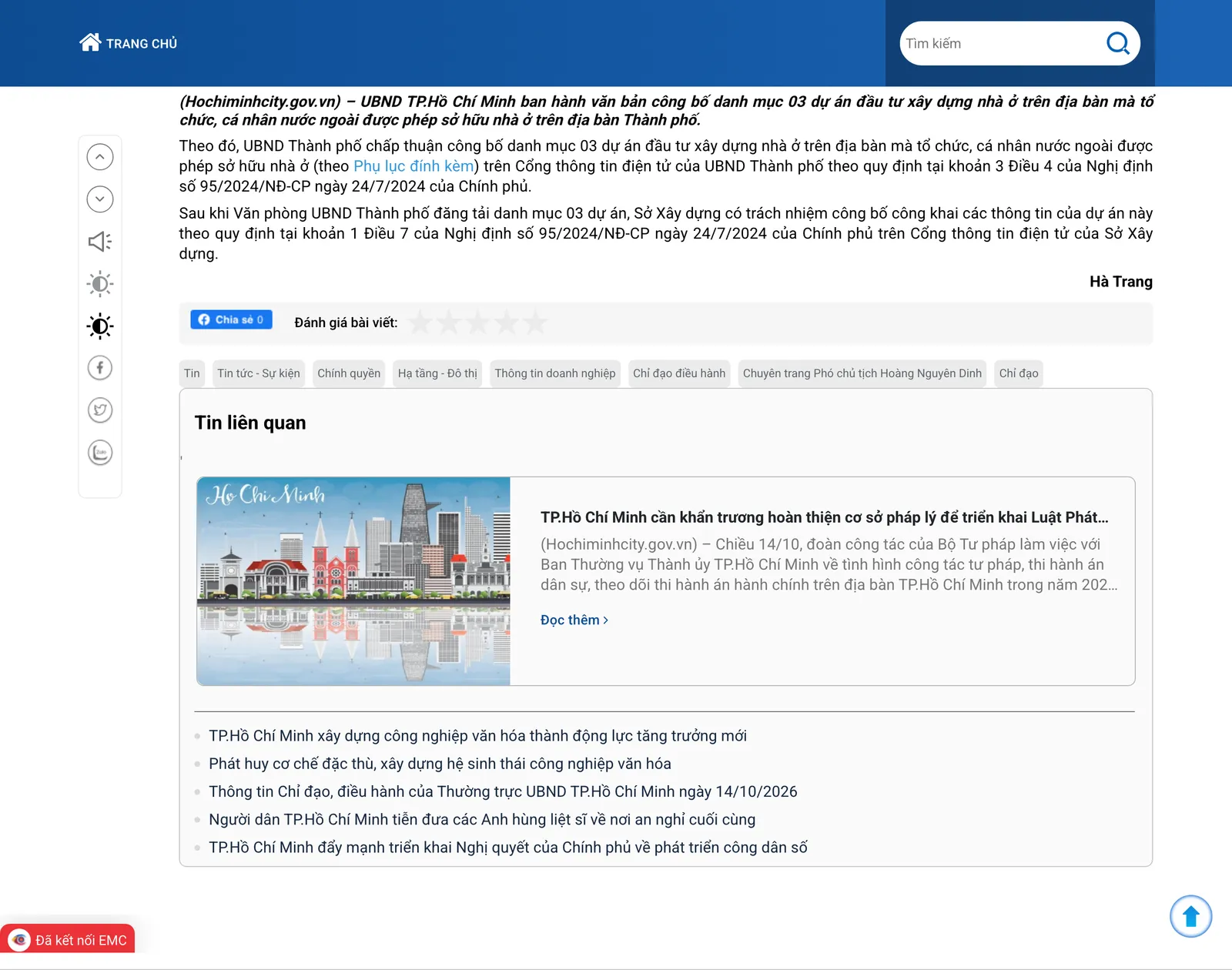
Foreign owners may own housing in a project, except one in an area requiring national defence and security assurance. In Ho Chi Minh City the City People’s Committee decides which projects are open and publishes the list on the city portal. By August 2026 the list held 148 commercial housing projects.
The list grows in batches, each with its own appendix. The July 2026 batch, issued by the City People’s Committee on 6 July, added three projects:
- The Tam Nhin residential area in Tan Tao ward.
- A shopping centre and apartments at 29B Nguyen Dinh Chieu Street in Sai Gon ward.
- An office and apartment complex at the corner of 3/2 Street and Le Dai Hanh Street.
The August batch added the Phuong Viet building (The Pegasuite) at 1002 Ta Quang Buu Street in Binh Dong ward.
After each batch, the Department of Construction publishes the project details on its own portal. Match your building’s name and address to the city list before you pay a deposit.
The Housing Law is being amended
As of 15 October 2026 the 30% cap and the 50-year term below are current law. A draft amended Law on Housing would drop individual houses in projects and keep apartments, and the National Assembly session opening on 17 October is due to consider it.
Step 2: check the 30% cap
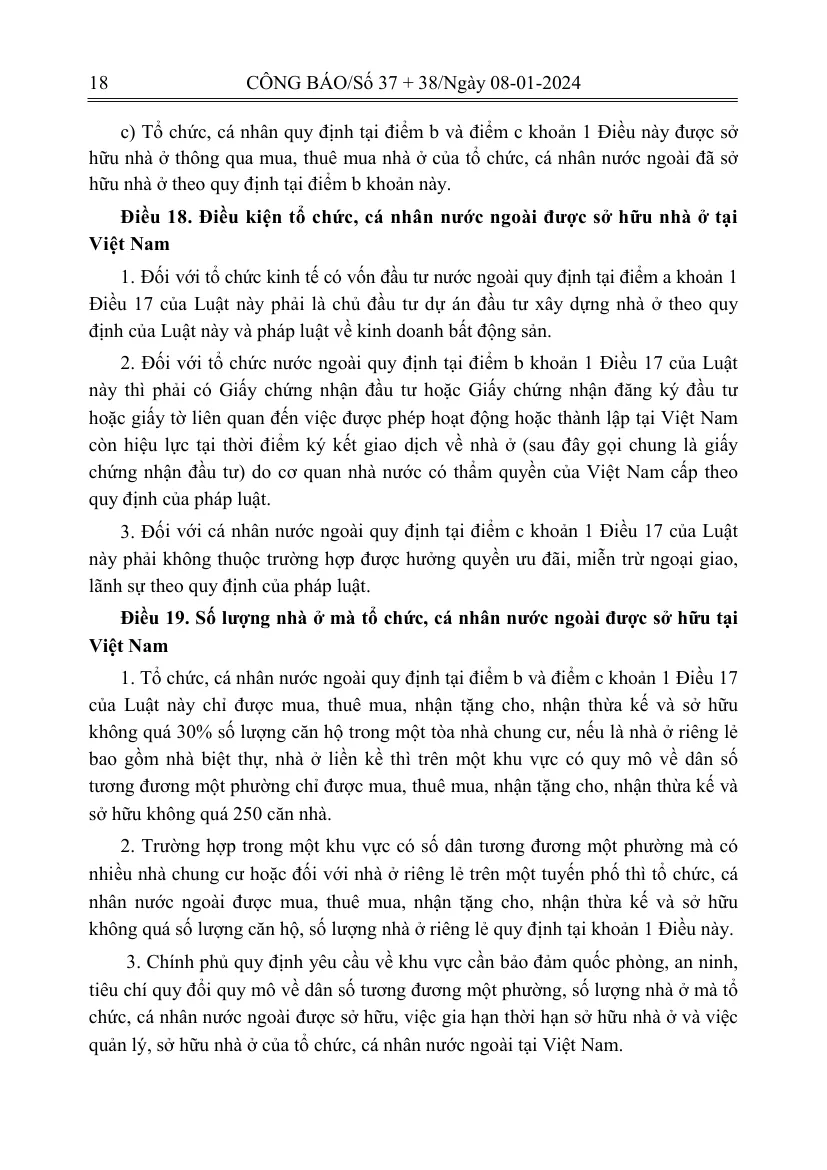
Foreign owners may own no more than 30% of the flats in one apartment building.
Tổ chức, cá nhân nước ngoài quy định tại điểm b và điểm c khoản 1 Điều 17 của Luật này chỉ được mua, thuê mua, nhận tặng cho, nhận thừa kế và sở hữu không quá 30% số lượng căn hộ trong một tòa nhà chung cư
Foreign organisations and individuals may buy, hire-purchase, receive as a gift, inherit and own no more than 30% of the number of apartments in one apartment building.
Law on Housing 27/2023/QH15, Điều 19 khoản 1
The decree counts 30% of the residential flats in the building. A building with several blocks on a shared podium has a 30% ceiling for each block. Ask the developer how many flats foreigners already hold in your block.
A stand-alone house, villa or row house has its own cap: no more than 250 houses in an area the size of a ward.
How long you own it: 50 years, then once more
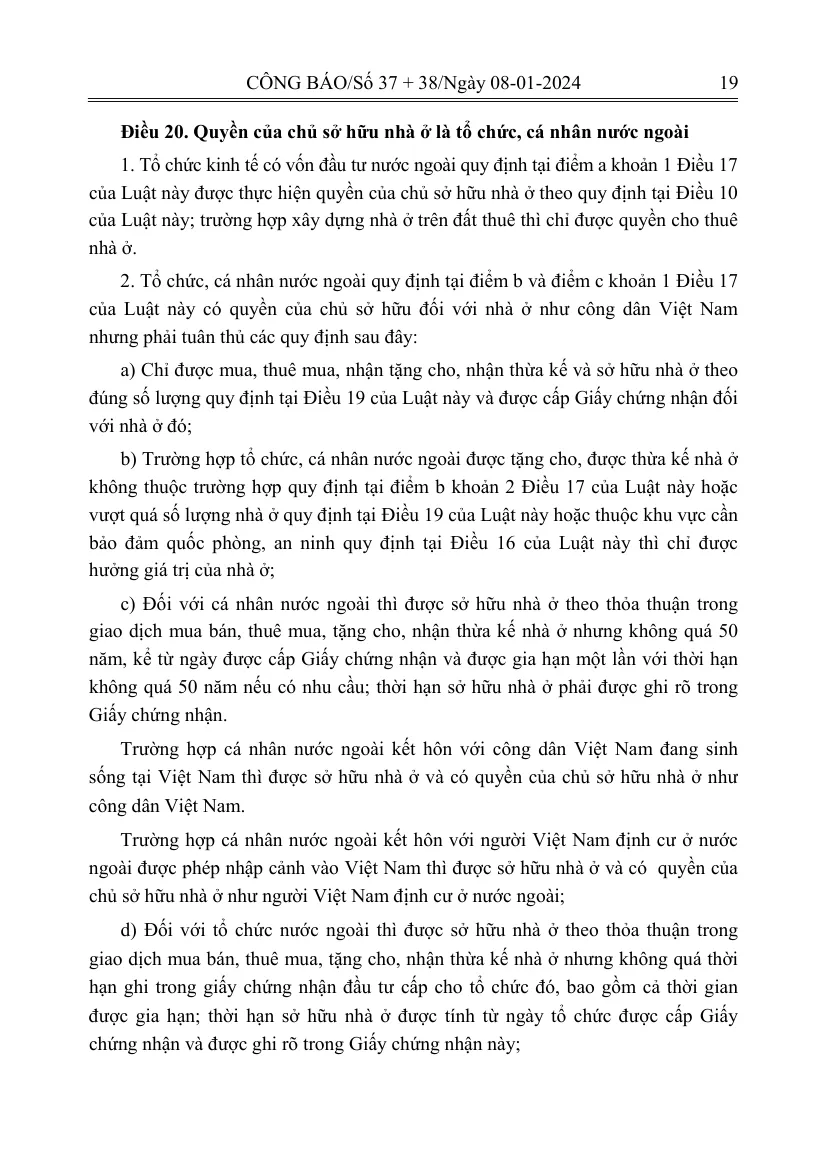
A foreign individual owns the housing for no more than 50 years from the date the Certificate is issued. The term is written in the Certificate. You can extend it once, for no more than 50 years.
To extend, send the dossier at least 3 months before the term ends to the provincial People’s Committee where the housing is. The committee has 30 days from a valid dossier to check it.
Before the term expires you may give or sell the housing to a person or entity eligible to own housing in Vietnam. A foreign owner in some listed cases is not issued a Certificate and may only sell or give the housing to an eligible person.
If you inherit or receive a gift beyond the cap, or in a defence area, you are entitled only to the value of the housing.
Step 3: deposit, contract and payments
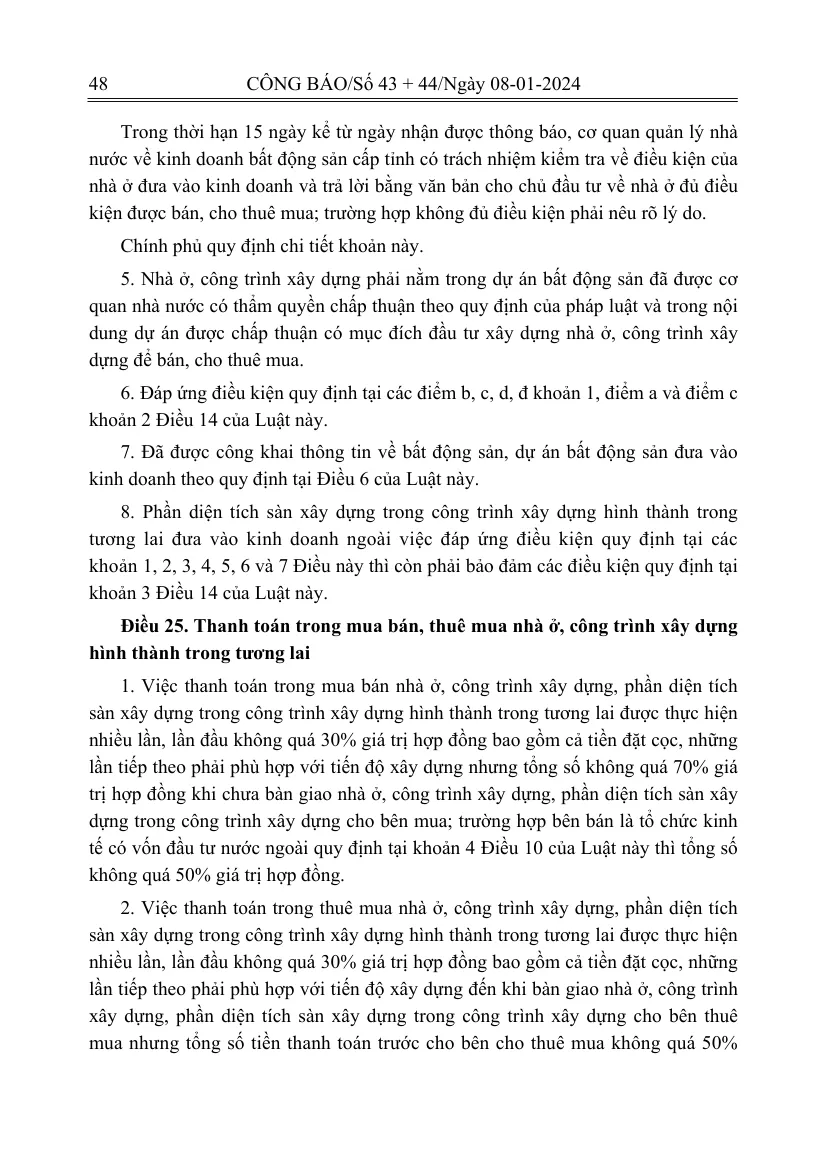
The developer may take a deposit of no more than 5% of the price once the housing meets the conditions to be sold. The deposit agreement must state the price.
Before an off-plan sale the developer must hold a construction permit where one is required. For an apartment building it must also hold papers proving the foundation work was accepted. It must notify the provincial real estate authority that the housing is eligible.
Payments before handover are capped:
- The first payment is at most 30% of the contract value including the deposit.
- Total payments before handover are at most 70%.
- Where the seller is a foreign-invested economic organisation, the cap is 50%.
A sale of housing must be notarised or certified, and the contract takes effect when that is completed. Notarisation is in Vietnamese, so bring an interpreter if you are not fluent.
You must pay for the purchase through a credit institution or a foreign bank branch operating in Vietnam.
The bank guarantee
Before selling future housing, the developer must have a commercial bank agree to guarantee its financial obligation to buyers. You get a copy of the bank’s commitment letter at signing.
The guarantee covers the money the developer took in advance if it does not hand over the home as committed. You may choose to have the guarantee or not. If you refuse it, you record the refusal in writing at signing. Ask for the guarantee.
Step 4: get the Certificate
The Certificate (Giấy chứng nhận) is the State’s document certifying land-use rights and ownership of assets attached to land. It is the paper that proves your flat is yours. A foreign owner of housing without a land-use right needs the housing transaction documents to be issued one.
The registration fee on housing is 0.5%.
Taxes and running costs
When you resell, personal income tax on the transfer is 2% of the transfer price for a resident individual. The rate is also 2% for a non-resident individual.
A buyer of a flat sold by the developer pays a maintenance fund of 2% of the unit’s value, counted apart from the price and stated in the sale contract.
The management service price is set in Vietnamese dong per square metre of usable floor area. Once the first building conference has met, you and the management company agree the price with it. Before that, the sale contract sets it. The provincial People’s Committee issues a framework price for disputes.
Renting your flat out

A foreign owner may lease the housing for any purpose the law does not prohibit. Give written notice of the lease to the housing management agency before leasing, and pay tax on the rental income.
An individual who leases out real estate pays personal income tax of 5% on the revenue above the threshold. Decree 141/2026 replaced VND 500 million with VND 1 billion in the decree that sets it. With several rental properties you deduct that amount once a year across all contracts.
Step by step
- Check you qualifyYou need a foreign passport and a written commitment that you have no diplomatic or consular privileges.
- Check the project is on the city listThe City People's Committee announces the projects open to foreign owners on the city portal.
- Check the building capForeign owners may hold no more than 30% of the flats in one building.
- Sign and pay through a bankThe contract is notarised or certified, and you pay through a credit institution or foreign bank branch in Vietnam.
- Get the CertificateOwnership is for no more than 50 years from the Certificate date.
Not confirmed: The amended Housing Law goes before the National Assembly from 17 October. Re-read the cap and term on this page after it passes, before you sign.
Common questions
Can a foreigner buy an apartment in Ho Chi Minh City?
In a commercial housing project outside defence and security areas that the city has announced. You need a valid passport and a written commitment that you hold no diplomatic or consular privileges.
How many flats in a building can foreigners own?
No more than 30% of the residential flats in the building, counted for each block where a building has several blocks on one podium.
How long can a foreigner own an apartment in Vietnam?
No more than 50 years from the date of the Certificate, extendable once for no more than 50 years. Send the extension dossier at least 3 months before the term ends.
How do I know if a Saigon project is open to foreigners?
Match the project's name and address to the city's list. The City People's Committee publishes each batch on the city portal, and by August 2026 it held 148 projects. The Department of Construction then publishes the project details on its portal.
How much deposit can a developer ask?
No more than 5% of the price, once the housing meets the conditions to be sold.
Is a bank guarantee required when I buy off-plan?
The developer must have a bank agree to guarantee its obligation to buyers. You choose at signing whether to have it, and a refusal is recorded in writing.
How do I pay for the apartment?
Through a credit institution or a foreign bank branch operating in Vietnam. Total payments before handover are capped at 70% of the contract value.
What tax do I pay when I sell?
Personal income tax on the transfer is 2% of the transfer price for a resident individual and for a non-resident individual.
Do I pay tax if I rent the flat out?
An individual who leases out real estate pays 5% on the revenue above the threshold. Decree 141/2026 raised that threshold from VND 500 million to VND 1 billion.
Will the new Housing Law change this?
A draft proposes limiting foreign ownership to apartments, no longer individual houses in projects. The National Assembly session opening on 17 October is due to consider the amended law.
Read next
General information checked against the sources listed above, not legal advice for your situation. Rules and office practice change; confirm with the immigration office or a licensed adviser before you act. See how guides are checked.
Spotted an error? Report it.