Rental Deposit in Ho Chi Minh City: Amounts and Return
A rental deposit in Ho Chi Minh City is usually 1-2 months of rent, with 2 months typical. If you refuse to go ahead, the landlord keeps it. If the landlord refuses, it returns the deposit plus an equal amount, which is double, unless agreed otherwise.
On this page
Two months of rent is the typical deposit in Ho Chi Minh City. For a District 1 one-bedroom that is VND 24,000,000 to 44,000,000. This guide shows the sum for each area, the Civil Code rule on who keeps it, and the steps to get it back.

How much deposit to expect
Deposits are usually 1-2 months, and 2 months’ rent is typical. The table doubles January 2026 one-bedroom first-hand rents.
| Area | 1-bed first-hand rent a month | Two months’ rent |
|---|---|---|
| District 1 | VND 12,000,000 to 22,000,000 | VND 24,000,000 to 44,000,000 |
| District 2 (Thao Dien) | VND 10,000,000 to 18,000,000 | VND 20,000,000 to 36,000,000 |
| District 7 (Phu My Hung) | VND 9,000,000 to 16,000,000 | VND 18,000,000 to 32,000,000 |
| District 3 | VND 8,000,000 to 15,000,000 | VND 16,000,000 to 30,000,000 |
| Binh Thanh | VND 7,000,000 to 13,000,000 | VND 14,000,000 to 26,000,000 |
For a two-bedroom in District 1, first-hand rent is VND 20,000,000 to 35,000,000 a month, so two months is VND 40,000,000 to 70,000,000. The city-wide second-hand one-bedroom range is VND 9,000,000 to 27,000,000, so two months is VND 18,000,000 to 54,000,000.
Second-hand contracts are sublets and usually cost more. The next table is a different measure: the October 2026 average of listings, which are asking prices, not contracts. Budget from the first-hand table and expect the listings to look cheaper or dearer than your real contract.
| Area (October 2026 listing average) | 1-bed rent a month | Two months’ rent |
|---|---|---|
| District 1 | 7 to 20 million VND | 14 to 40 million VND |
| District 3 | 5 to 10 million VND | 10 to 20 million VND |
| District 7 | 7.5 to 13 million VND | 15 to 26 million VND |
Listings also show one-bedroom rents by building, per month:
- In Binh Thanh: Vinhomes Central Park 9.5 to 17 million VND, City Garden 14 to 23 million VND and Sunwah Pearl 16 to 19 million VND.
- Also in Binh Thanh: The Manor 13.5 to 15.5 million VND and Richmond City 8 to 9 million VND.
- In Thao Dien: Masteri Thao Dien 8 to 12 million VND and The Sun Avenue 7 to 10 million VND.
Read your own lease against these ranges before you transfer anything. The apartment guide has the rest of the rent tables, and the cost of living guide the other monthly costs.
What the law says about a deposit
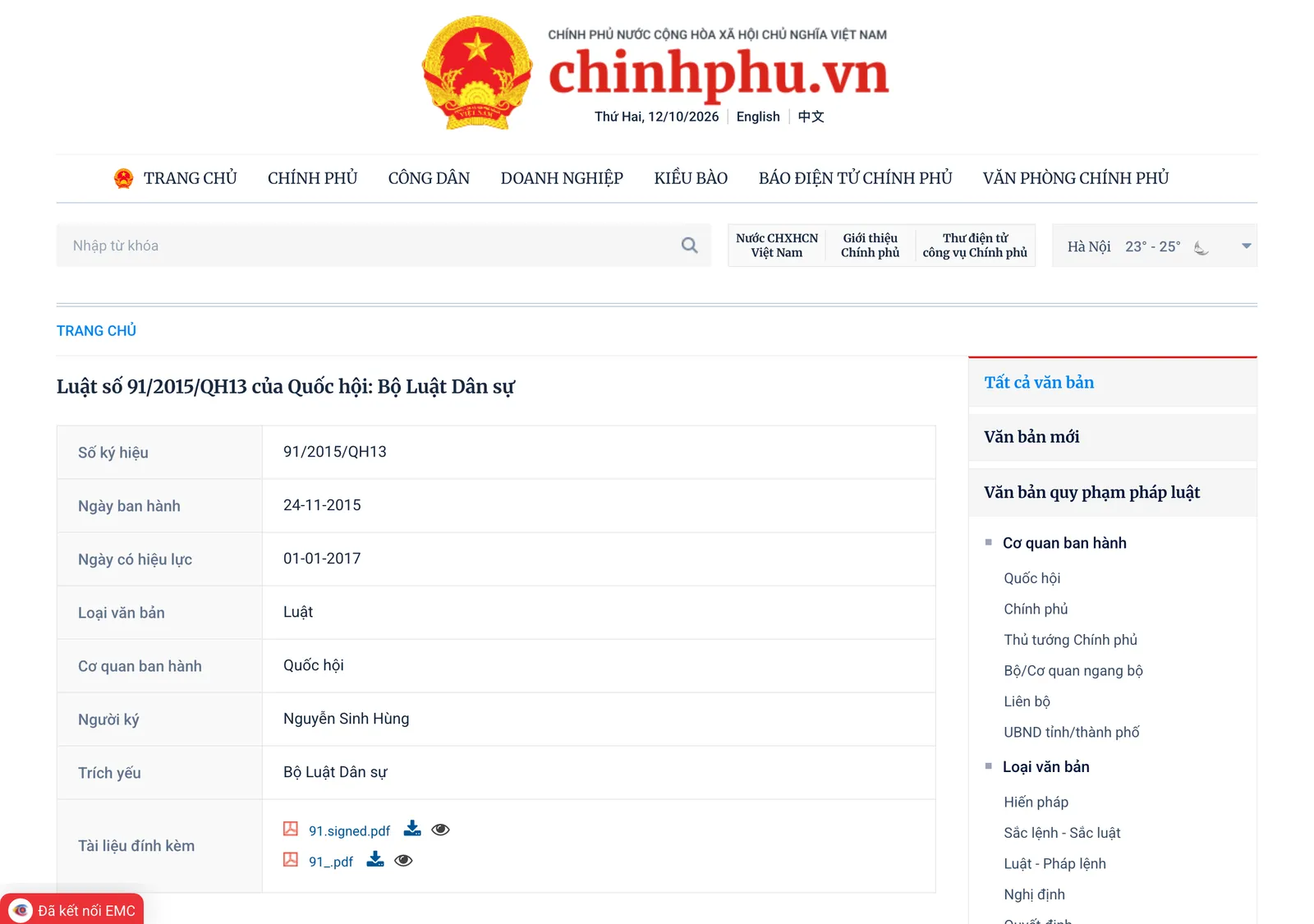
A deposit is one party handing the other money or valuable property for a period. Its purpose is to secure the conclusion or the performance of a contract. Who keeps it depends on who refuses the contract.
nếu bên đặt cọc từ chối việc giao kết, thực hiện hợp đồng thì tài sản đặt cọc thuộc về bên nhận đặt cọc
If the depositor refuses to conclude or perform the contract, the deposited property belongs to the deposit-receiver.
nếu bên nhận đặt cọc từ chối việc giao kết, thực hiện hợp đồng thì phải trả cho bên đặt cọc tài sản đặt cọc và một khoản tiền tương đương giá trị tài sản đặt cọc, trừ trường hợp có thoả thuận khác
If the deposit-receiver refuses to conclude or perform the contract, it must return the deposited property plus an amount equal to its value, unless otherwise agreed. Civil Code 91/2015/QH13, Điều 328 khoản 2
If the contract is concluded and performed, the deposited property is returned to the depositor, or deducted to perform the obligation to pay.
Deposit or ky cuoc
The Civil Code has a second kind of deposit, ky cuoc (ký cược). It is the tenant of movable property handing the lessor money or valuables to secure the return of the leased property. A house or an apartment is immovable property. Ky cuoc does not cover a home: its rules are written for movable property.
For a home deposit, read the Article 328 rule above. The receiver’s duty to return the deposit plus an equal amount, in effect double, applies unless otherwise agreed, so check that the lease does not remove it.
Before you pay anything
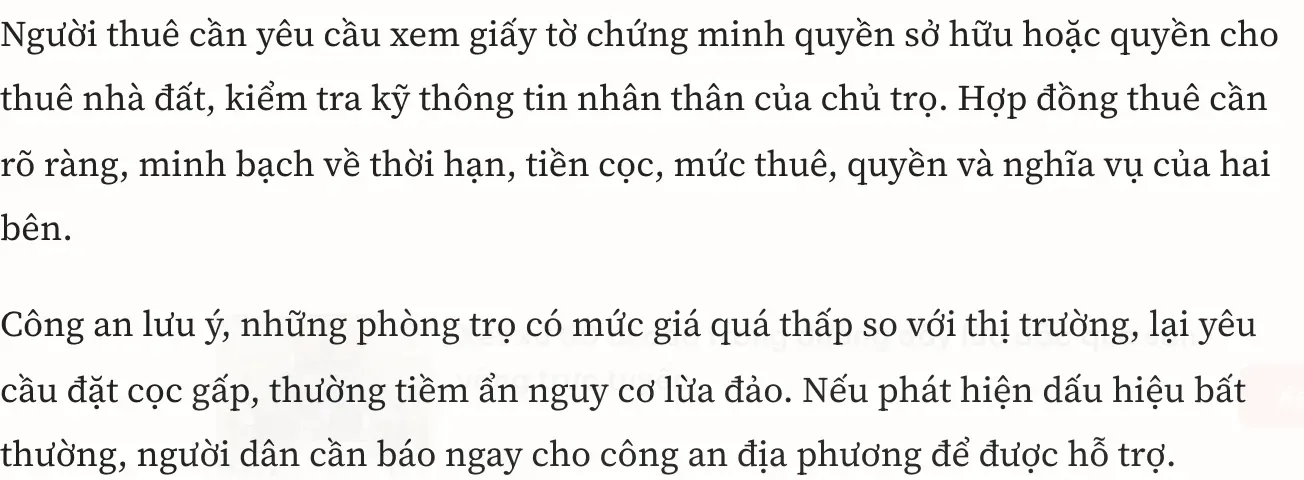
City Police advise against transferring a deposit before you have been to the place and met the owner in person. They also advise asking to see papers proving ownership or the right to lease, and checking the landlord’s personal details.
The scams the police describe all take a deposit first:
- A listing with photos of a clean room at a rent far below the market, with a request to transfer the deposit online to hold it.
- A fake owner or broker who walks you through a room and cuts contact once you pay.
- A room rented and sub-let, taking deposits from several people at once.
- Fake contracts with forged signatures and seals, a collected deposit and sometimes a management fee.
A room priced far below the market that also asks for an urgent deposit often carries a scam risk. Scammers ask for a deposit of VND 500,000 to 1 million before you view.
One renter paid a deposit and first-month fees to a man who said he was a broker. The owner had received no information or money. Pay the person whose name matches the ownership paper you checked.
Do not leave your passport with a landlord as a guarantee. That is travel advice, not a Vietnamese rule.
Put the deposit terms in writing
The deposit sits next to the lease terms, and the landlord and tenant may agree the term, the rent and how rent is paid. Write these points into the lease or a signed deposit note:
- the sum, and what it secures: the conclusion or the performance of the contract;
- what happens if you refuse to go ahead, and what happens if the landlord does;
- that the deposit is returned or deducted if the contract is concluded and performed;
- the condition of the home at hand-over; you return it in a condition similar to when you received it.
On notice, the party ending the lease on its own must give at least 30 days in advance, unless the parties agree otherwise. A landlord may not end the lease on its own during the term, except in the cases the law lists. Those cases include rent unpaid in full for 3 months or more.
The contract guide reads each of those lease clauses in turn.
Getting it back at move-out

You return the home in a condition similar to when you received it, except for natural wear and tear, or in the condition agreed. If its value has fallen from its condition when received, the landlord has the right to claim compensation for the damage, except for natural wear and tear.
Take dated photos at hand-over and again at move-out, so that “natural wear” has a record behind it. If the lease ran its course, the deposit is returned or deducted to perform the obligation to pay.
The Civil Code sets no number of days for the refund. If the lease fixes no date, you may demand the deposit at any time, with reasonable notice to the landlord. Write a refund date into the lease, counted from the day you hand back the keys.
Final electricity and water bills
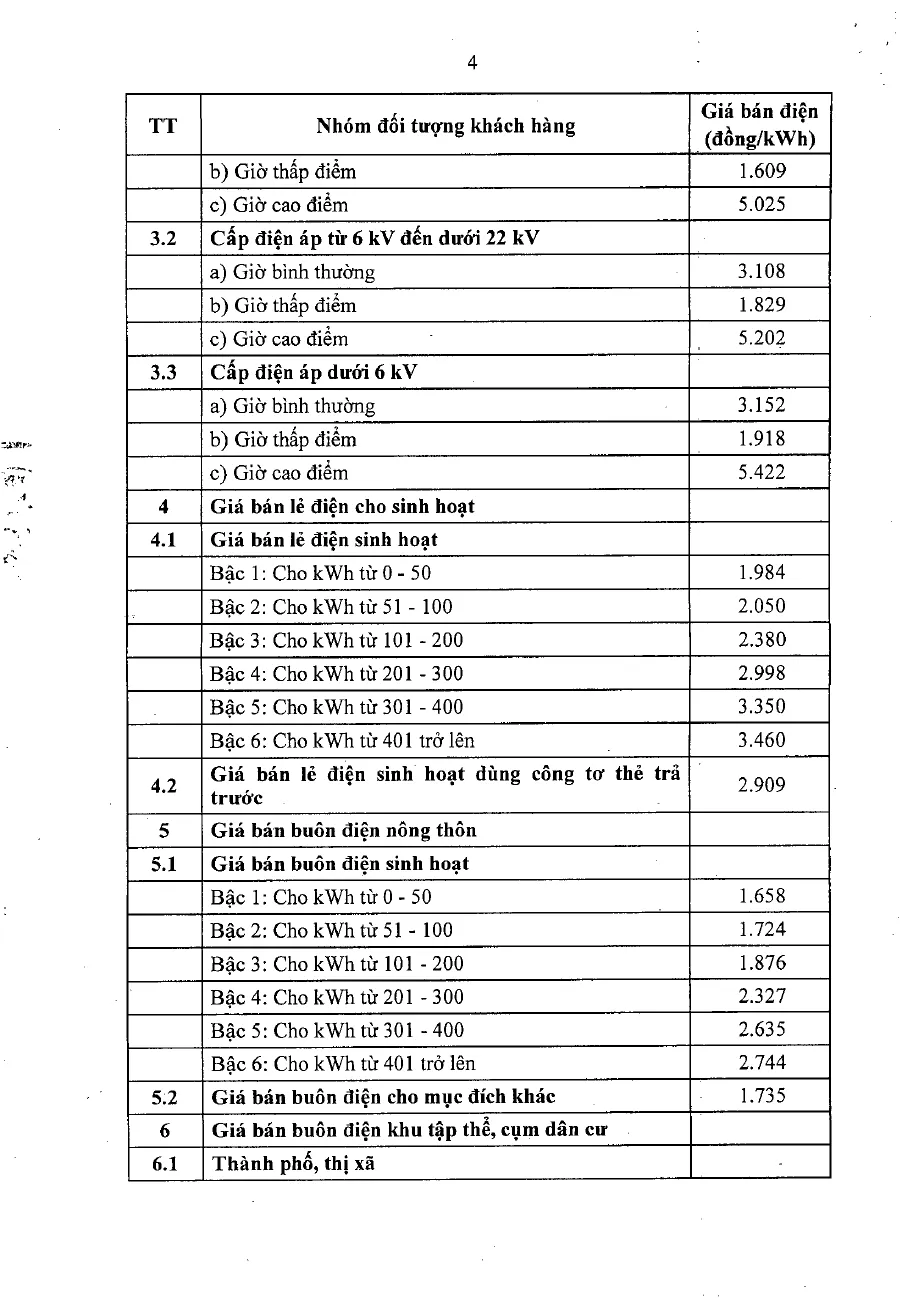
When a contract party changes or the electricity contract ends, the use in each price tier is adjusted by the actual number of days in the meter-reading period. Ask for the last reading on the day you leave, and compare it with the bill.
Household water is VND 6,700 per cubic metre up to 4 cubic metres per person a month, VND 12,900 from 4 to 6 and VND 14,400 above 6. These are the 2026 prices, unchanged from 2025.
They exclude 5% VAT and the drainage and wastewater-treatment fee. That fee is 30% of the water price and carries 8% VAT, so the bill has two VAT rates: 5% on the water and 8% on the drainage fee.
The landlord electricity guide gives the tiers and the fine for overcharging.
If the landlord will not return it
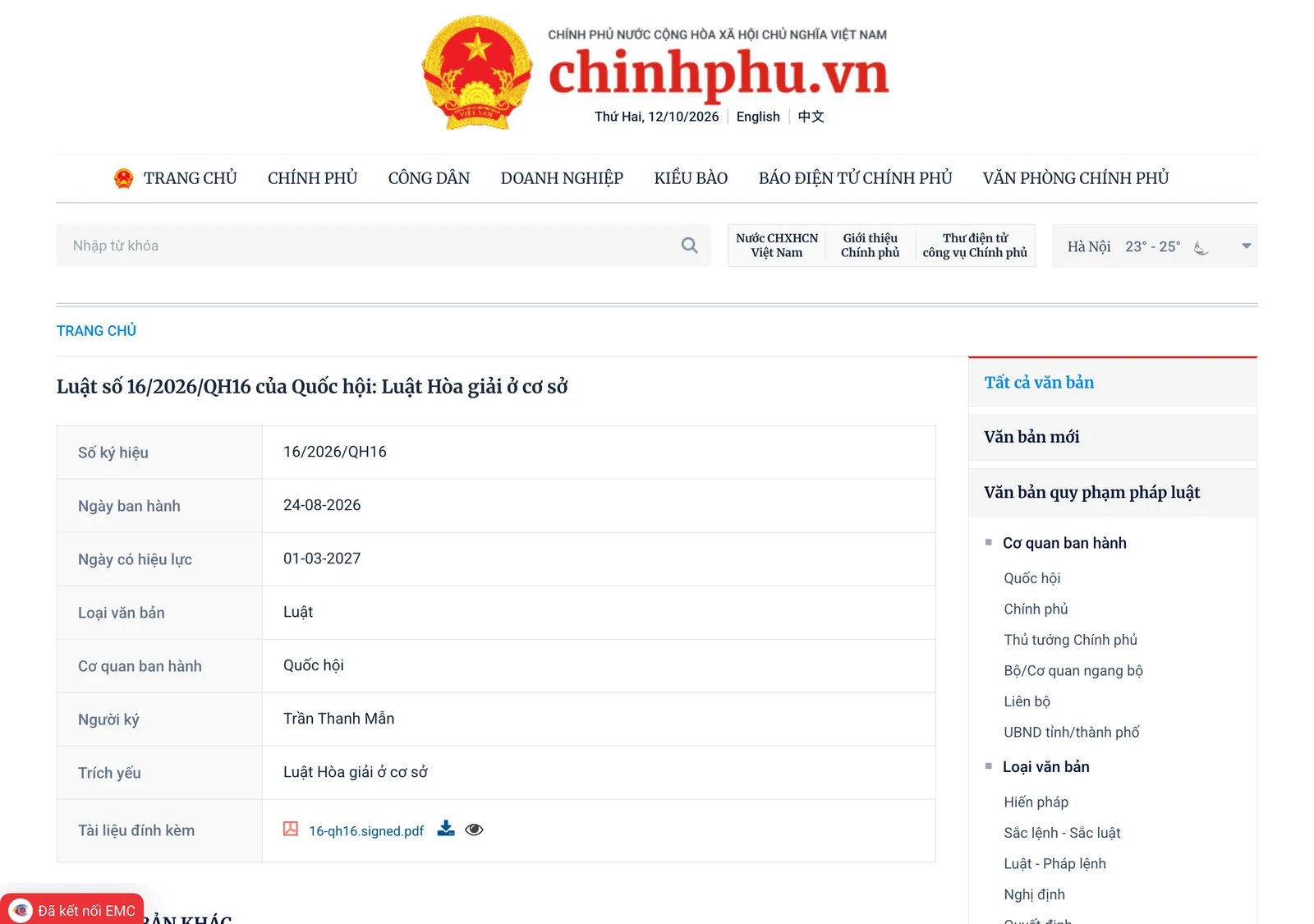
Grassroots mediation is carried out for disputes and violations, except the cases the law excludes. It respects the parties’ voluntary will and is not forced on them. Mediation starts when one or more parties ask for it.
You and the landlord may pick the mediator, the place and the time. If you pick no mediator, the head of the mediation group assigns one. The State pays the mediator’s per-case remuneration.
The mediation law is changing. These steps come from the current Law 35/2013/QH13. The new Law on Grassroots Mediation, passed on 24 August 2026, takes effect on 1 March 2027.
The previous law expires from that date. A case that has not finished mediation before then continues under the previous law. Under the new law, the parties may ask the competent People’s Court to recognise a successful mediation result.

The limitation period for a court request on a contract dispute is 3 years. The court list below comes from the Supreme People’s Court’s decision on court headquarters of 1 July 2025. It shows the area each regional court is listed for. Start with the court listed for the home’s area.
| Court | Listed for | Address |
|---|---|---|
| Ho Chi Minh City People’s Court | The whole city | 131 Nam Ky Khoi Nghia, Ben Thanh Ward |
| Regional Court 1 | Former Districts 1, 3 and 4 | 4-6 Ly Tu Trong, Sai Gon Ward |
| Regional Court 2 | Thu Duc City | 1400 Dong Van Cong, Cat Lai Ward |
| Regional Court 3 | Former Districts 5, 6 and 11 | 642 Nguyen Trai, Cho Lon Ward |
| Regional Court 4 | Former District 10, Tan Binh | 27 Thanh Thai, Dien Hong Ward |
| Regional Court 5 | Binh Thanh, Phu Nhuan | 453-455-457 Bach Dang, Gia Dinh Ward |
| Regional Court 6 | Former District 7, Nha Be, Can Gio | 424A Nguyen Binh, Nha Be Commune |
| Regional Court 7 | Go Vap, former District 12 | 416/2 Duong Quang Ham, An Nhon Ward |
| Regional Court 8 | Cu Chi, Hoc Mon | 77B Provincial Road 8, Tan An Hoi Commune |
| Regional Court 9 | Tan Phu, Binh Tan | 422/1 Ho Hoc Lam, An Lac Ward |
| Regional Court 10 | Former District 8, Binh Chanh | 4 Street 3, Tan Nhut Commune |
Step by step
- Work out the sumTake the rent in the lease and multiply it by 2, the typical deposit.
- Meet the owner firstGo to the place and meet the owner before you transfer a deposit.
- Check who you are payingAsk for papers proving ownership or the right to lease, and pay the person they name.
- Write the deposit termsState what the deposit secures and what happens if either side refuses.
- Claim it back at move-outReturn the home in a condition similar to when you received it, except for natural wear and tear.
Not confirmed: Court: the table lists each regional court's area; the rule on which court takes a deposit claim is not in it.
Common questions
How big is a rental deposit in Ho Chi Minh City?
Deposits are usually 1-2 months, with 2 months' rent typical. For a District 1 one-bedroom first-hand that is VND 24,000,000 to 44,000,000.
Do I lose the deposit if I back out?
If the depositor refuses to conclude or perform the contract, the deposited property belongs to the deposit-receiver.
What if the landlord backs out?
The landlord must return the deposit plus an amount equal to its value, unless the two sides agreed otherwise.
When is the deposit returned if the lease goes ahead?
It is returned to the depositor, or deducted to perform the obligation to pay. The law sets no number of days; if the lease fixes none, you may demand it at any time with reasonable notice.
Can the landlord deduct for damage?
At the end you return the home in a condition similar to when you received it, except for natural wear and tear. If its value has fallen, the landlord may claim compensation for the damage, except for natural wear and tear.
Is it safe to pay a deposit before I view the home?
Do not transfer a deposit before you have been to the place and met the owner in person. Scammers ask for a deposit of VND 500,000 to 1 million first and a viewing later.
How long do I have to sue for a deposit?
The limitation period for a court request on a contract dispute is 3 years, from when the right holder knew or should have known of the infringement.
Should I leave my passport as a guarantee?
No. Do not leave your passport with a landlord as a guarantee. That is travel advice, not a Vietnamese rule.
What is ky cuoc and does it cover a home?
Ky cuoc (ký cược) is a deposit by a tenant of movable property to secure the return of the leased property. A home is immovable property, so a home deposit is not ky cuoc.
Read next
General information checked against the sources listed above, not legal advice for your situation. Rules and office practice change; confirm with the immigration office or a licensed adviser before you act. See how guides are checked.
Spotted an error? Report it.