Food Poisoning in Ho Chi Minh City: What to Do, Who to Call
Stop eating the suspect food, keep it, and replace fluids with oresol. Go to a medical facility at once for high fever, severe dehydration or blood in the stool. The 115 line is for Vietnamese speakers only. In English, call FV Hospital's ambulance hotline or go to Vinmec Central Park.
Medical information. This guide is general information, not a substitute for professional medical advice. In an emergency, call 115 first.
On this page
Food poisoning shows as stomach and bowel symptoms: abdominal pain, nausea, vomiting and diarrhoea. The timing narrows the cause but does not name it, because two causes overlap. Note when you ate and when it started, and tell the doctor.
The symptom clock
Chemicals are fastest and micro-organisms slowest. Spoiled food and natural toxins share the same 2 to 4 hours, so the clock does not separate those two.
- Chemicals start within minutes to a few hours of eating, mostly with nervous-system symptoms such as convulsions, dizziness and loss of consciousness.
- Spoiled food shows symptoms about 2 to 4 hours after the meal.
- Natural toxins have an average incubation of 2 to 4 hours.
- Micro-organisms start about 6 to 48 hours after the meal, with diarrhoea 3 or more times a day.
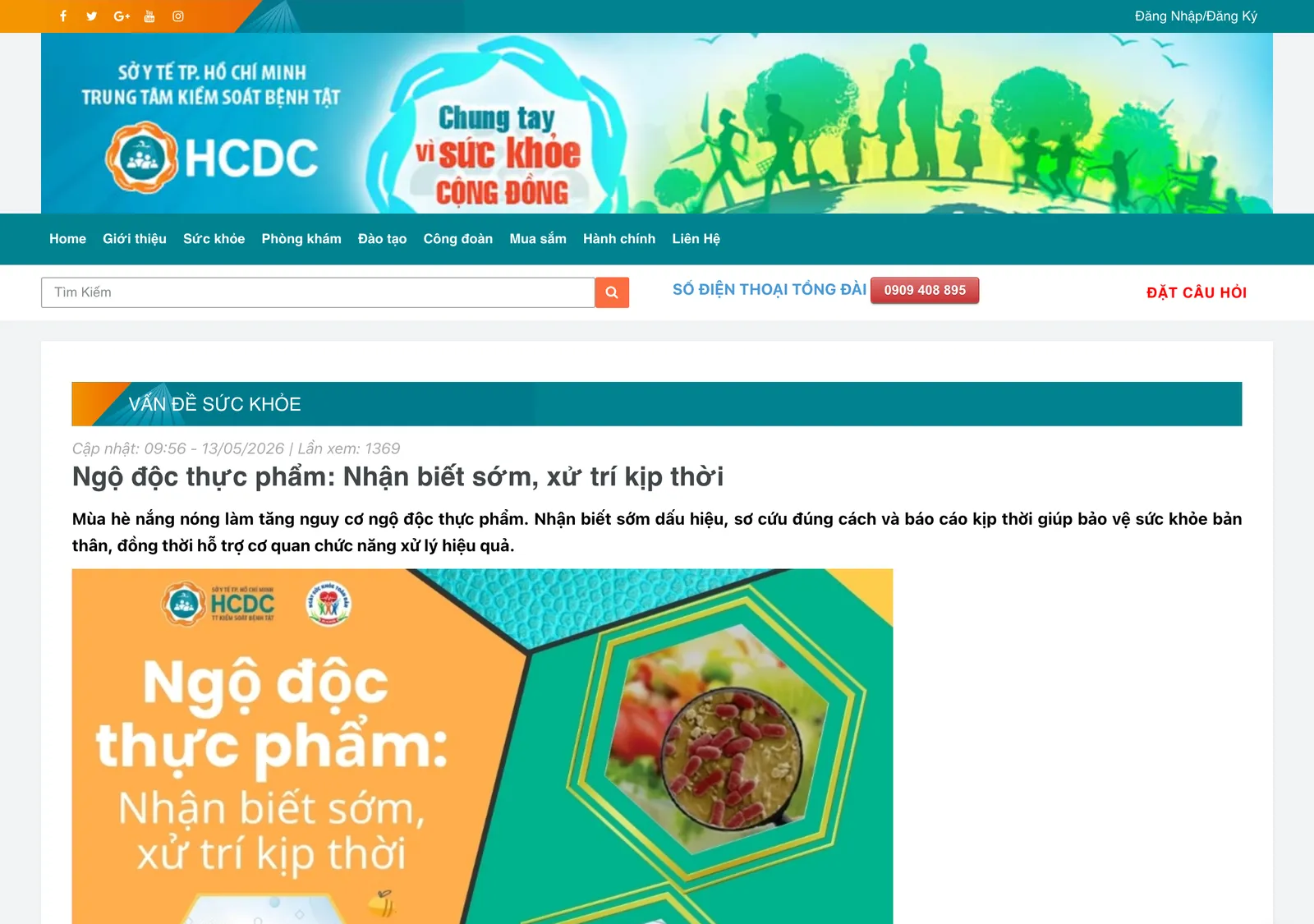
Unsafe food can cause more than 200 different diseases, from diarrhoea to cancers.
What to do first
- Stop eating the suspect food and keep all of it, including vomit, stool and urine, for verification.
- With diarrhoea and vomiting, replace water and electrolytes with oresol mixed as directed, or a salt-sugar solution. Mix the whole sachet in the water volume printed on it. Chain pharmacies sell it; see the pharmacy guide.
- Rest, and do not eat hard, greasy or hard-to-digest food. Do not take medicine on your own, above all antibiotics.
- Go to the nearest medical facility if the signs below appear, or call 115 if you speak Vietnamese.
When to go to a medical facility
Go the same day for high fever or severe dehydration, or blood in the stool. Dehydration is the most severe threat of diarrhoea. Diarrhoea that lasts 14 days or longer counts as persistent, so do not wait that long. Take babies, young children and older adults in early, since dehydration is the biggest threat.
Tell the doctor when you ate, what you ate, where, and your symptoms.
Convulsions, impaired consciousness or breathing failure mean a medical facility at once, whatever the cause. Natural toxins can get worse fast, so go straight to emergency care.
Call 115 for a medical emergency. The 115 line is for Vietnamese speakers only, so in English go straight to a hospital with a 24-hour emergency line. FV Hospital’s ambulance hotline is (028) 35 11 35 00 and its Accident & Emergency runs 24/7. Vinmec Central Park’s emergency department works 24/24h on 0283 6221 166.
Call 112 if you cannot tell which service you need. Under a plan approved on 29 June 2026, 113, 114 and 115 will merge into 113; until then they keep working normally. The emergency numbers page has the full list, and the hospitals guide covers more hospitals.
Safer street food in Ho Chi Minh City’s heat
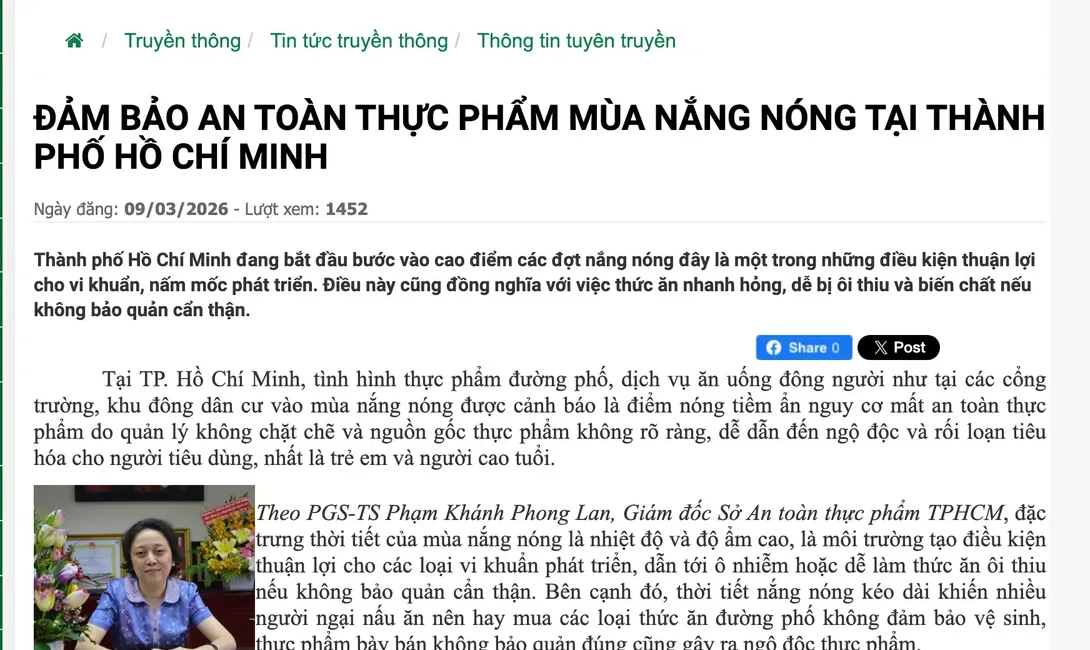
Street food and mass catering at school gates and crowded residential areas are flagged in hot weather as a food-safety hot spot, because of loose management and unclear food origin.
- Eat cooked food and drink boiled water; that is the city food safety rule of thumb.
- Skip raw-fish salad and rare beef in hot weather.
- Drink boiled water, bottled water or a sealed soft drink. If you cannot tell where the ice came from, order the drink without it.
- Do not carry food on a long trip with no cold storage. Cooked food left at room temperature for more than 2 hours is a risk, because bacteria multiply very fast in hot weather.
- Raw fruits and vegetables are often linked to ETEC bacteria. Raw or undercooked seafood has been implicated in cholera outbreaks.
In November 2025 a street banh mi outbreak in Hanh Thong and Binh Loi Trung wards reached 235 cases, with Salmonella suspected.
Who to report to
Report the incident at once to the food safety agencies and the local authority. The quickest route is the hotline below. Give the place, the type of food outlet, the number of people who ate together and the number with symptoms. The symptoms you saw and the name of the outlet speed up the investigation.
- Food Safety Department hotline: 028 39301714.
- Its food-poisoning monitoring office: 028 3535 6436.
The department wants reports of outlets with poor hygiene, no papers showing food origin, or food that shows signs of spoiling.
Step by step
- Stop eating and keep the foodStop eating the suspect food and keep all of it, including vomit, stool and urine, for verification.
- Replace fluidsUse oresol mixed as directed, or a salt-sugar solution, when you have diarrhoea and vomiting.
- Rest and keep the food lightRest, and do not eat hard, greasy or hard-to-digest food.
- Get help on serious signsGo to the nearest medical facility, or call 115 if you speak Vietnamese. Go at once for convulsions, impaired consciousness or breathing failure.
- Report the outletReport the incident to the food safety agency and give the name of the food outlet.
Common questions
How long after eating does food poisoning start?
Chemical poisoning starts within minutes to a few hours. Spoiled food and natural toxins take about 2 to 4 hours. Micro-organisms take about 6 to 48 hours.
What are the symptoms of food poisoning?
Abdominal pain, nausea, vomiting and diarrhoea. Norovirus, a common foodborne infection, brings nausea, explosive vomiting, watery diarrhoea and abdominal pain.
Should I keep the food that made me ill?
Stop eating it and keep all of it, including vomit, stool and urine, for verification.
What do I drink when I have diarrhoea and vomiting?
Oresol (oral rehydration salts) mixed exactly as the sachet directs, or a salt-sugar solution. Do not take other medicine on your own, above all antibiotics. Oral rehydration solution is clean water, sugar and salt.
Which street food should I skip in hot weather?
The Food Safety Department does not recommend raw-fish salad or rare beef in hot weather. Raw fruits and vegetables are often linked to ETEC bacteria. Raw or undercooked seafood has been implicated in cholera outbreaks.
Is the ice in my drink safe?
Ice is a risk in a street drink. If you cannot tell where it came from, order the drink without ice and stay with boiled water, bottled water or a sealed soft drink.
Who do I report a bad food stall to?
The Ho Chi Minh City Food Safety Department hotline, 028 39301714. Report outlets with poor hygiene, no papers showing food origin, or spoiling food. Ask your host or hotel to place the call if you do not speak Vietnamese.
What number do I call for an ambulance?
Call 115 for a medical emergency. The 115 line is for Vietnamese speakers only, so in English call a hospital line: FV's ambulance hotline is (028) 35 11 35 00. Call 112 if you cannot tell which service you need.
Read next
General information checked against the sources listed above, not legal advice for your situation. Rules and office practice change; confirm with the immigration office or a licensed adviser before you act. See how guides are checked.
Spotted an error? Report it.