New Visa Rules for Vietnam in 2026: What Changed and When
Law 118/2025 has applied since 1 July 2026 and adds the UD1 and UD2 visas. Visa fees under Circular 28/2026 apply from 1 April 2026. Overstay fines follow Decree 282/2025, in force since 15 December 2025. Tan Son Nhat piloted a pre-arrival declaration from 15 April 2026.
On this page
- The changes at a glance
- Visa-free entry: two lists of countries
- E-visa: all nationalities, more gates
- Law 118/2025: in force since 1 July 2026
- Visa fees from 1 April 2026
- Overstay fines under Decree 282/2025
- Declaring your stay: Circular 87/2026
- Work permits and work fines
- Arriving at Tan Son Nhat: the pre-arrival declaration
- Common questions
The changes at a glance
Dates are when each rule began to apply. The sections below say what each means for you.
| Applies from | What changed |
|---|---|
| 15 March 2025 | Resolution 44/NQ-CP: 45 days visa-free for named countries |
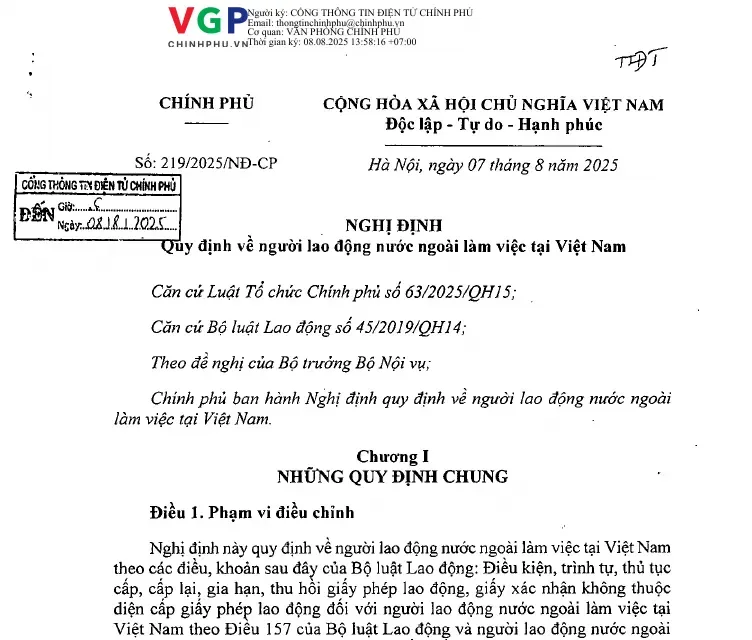
| 7 August 2025 | Decree 219/2025/NĐ-CP on work permits |
| 15 August 2025 | Resolution 229/NQ-CP: 45 days visa-free for more countries, tourism only |
| 2 December 2025 | Resolution 389/NQ-CP adds e-visa border gates |
| 15 December 2025 | Decree 282/2025/NĐ-CP sets the overstay fines |
| 1 January 2026 | Work-permit exemption for digital-technology workforce |
| 1 April 2026 | Circular 28/2026/TT-BTC sets the visa fees |
| 15 April 2026 | Pre-arrival declaration pilot at Tan Son Nhat |
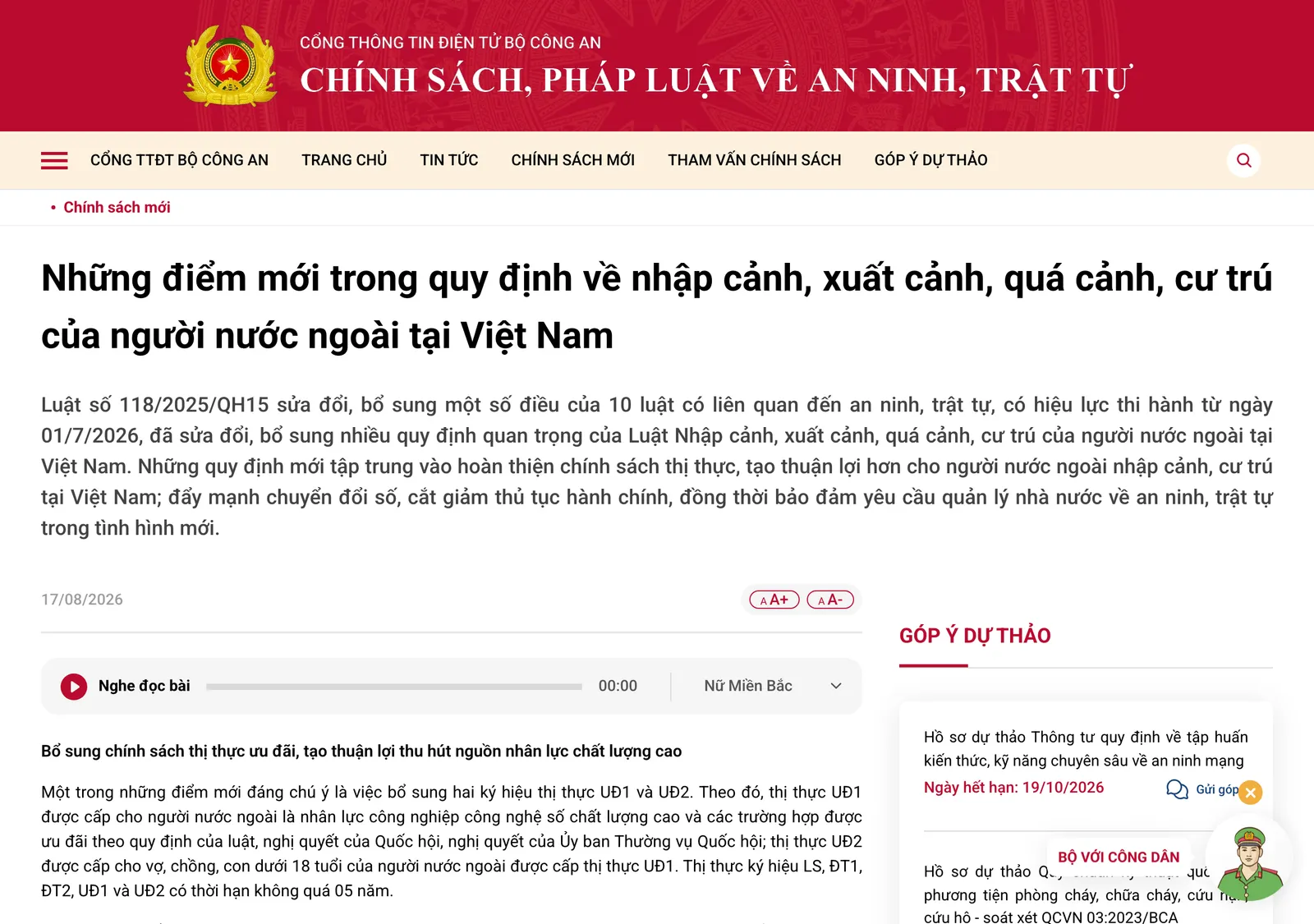
| 1 July 2026 | Law 118/2025/QH15 and a revised form NA5 |
| 24 July 2026 | Circular 87/2026/TT-BCA on declaring a foreigner’s stay |
| 10 September 2026 | Decree 283/2026/NĐ-CP on work fines |
Visa-free entry: two lists of countries
Resolution 44/NQ-CP gives citizens of the named countries 45 days from entry, for any passport type and any purpose. It applies to entries from 15 March 2025 through the end of 14 March 2028.
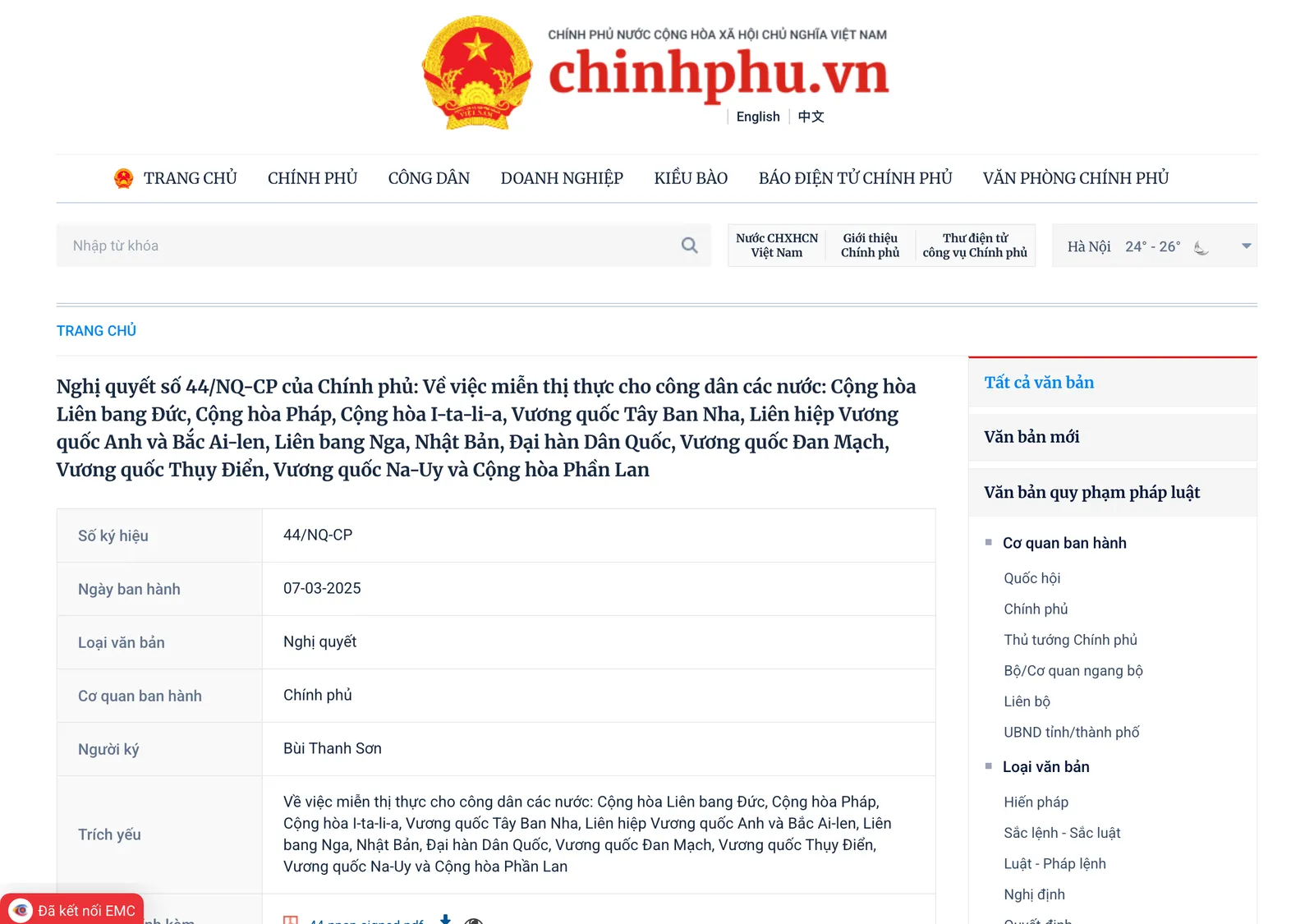
The countries are Germany, France, Italy, Spain, the United Kingdom and Northern Ireland, Russia, Japan, South Korea, Denmark, Sweden, Norway and Finland.
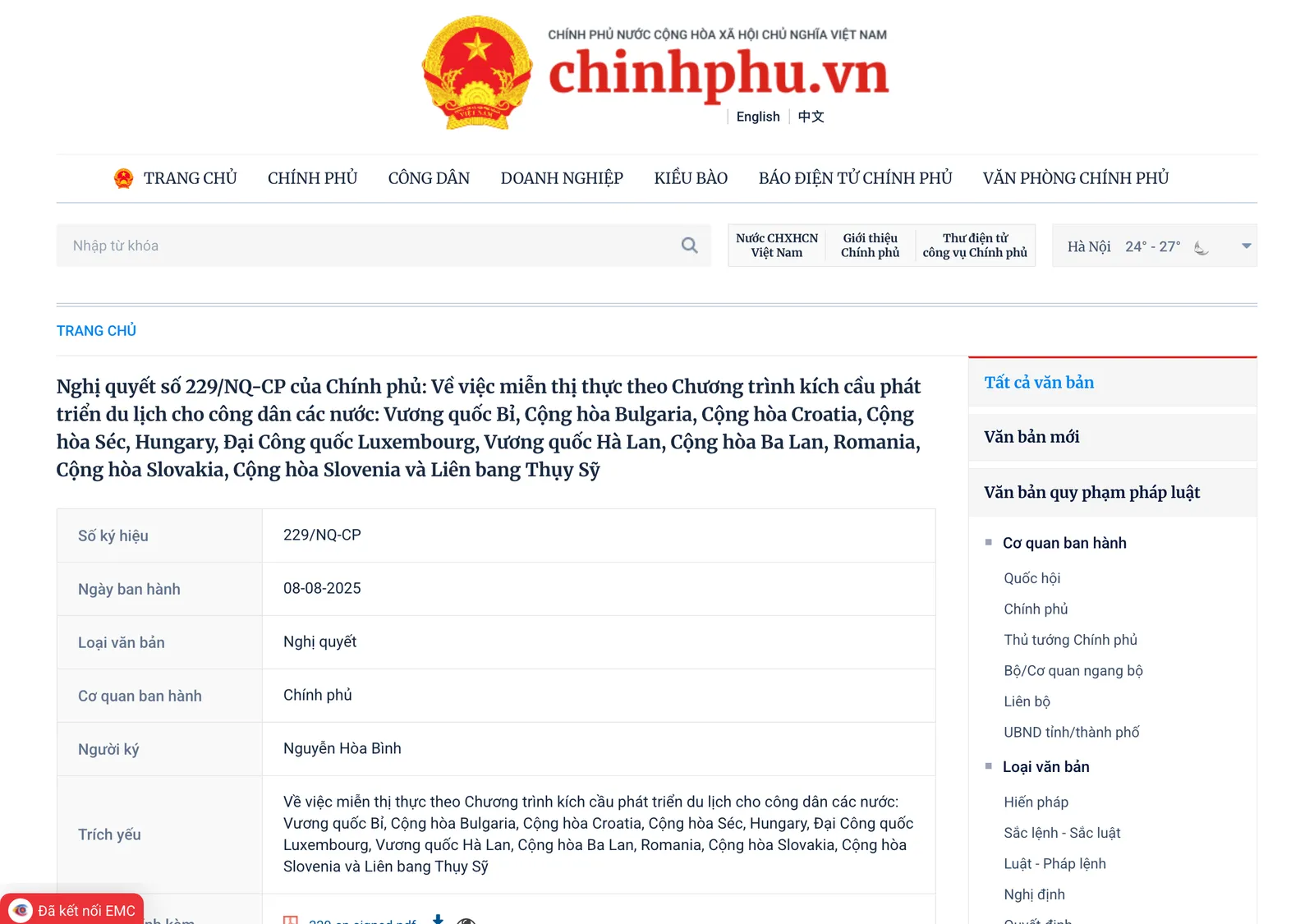
Resolution 229/NQ-CP gives citizens of the countries below 45 days from entry, for tourism only, on any passport type. It applies from 15 August 2025 through the end of 14 August 2028.
Those countries are Belgium, Bulgaria, Croatia, Czechia, Hungary, Luxembourg, the Netherlands, Poland, Romania, Slovakia, Slovenia and Switzerland. A passport outside both lists needs a visa or an e-visa. See the visa exemption guide and the Vietnam visa types guide.
Phu Quoc island has its own rule. Foreigners entering, exiting or staying there are visa-exempt for up to 30 days.
E-visa: all nationalities, more gates
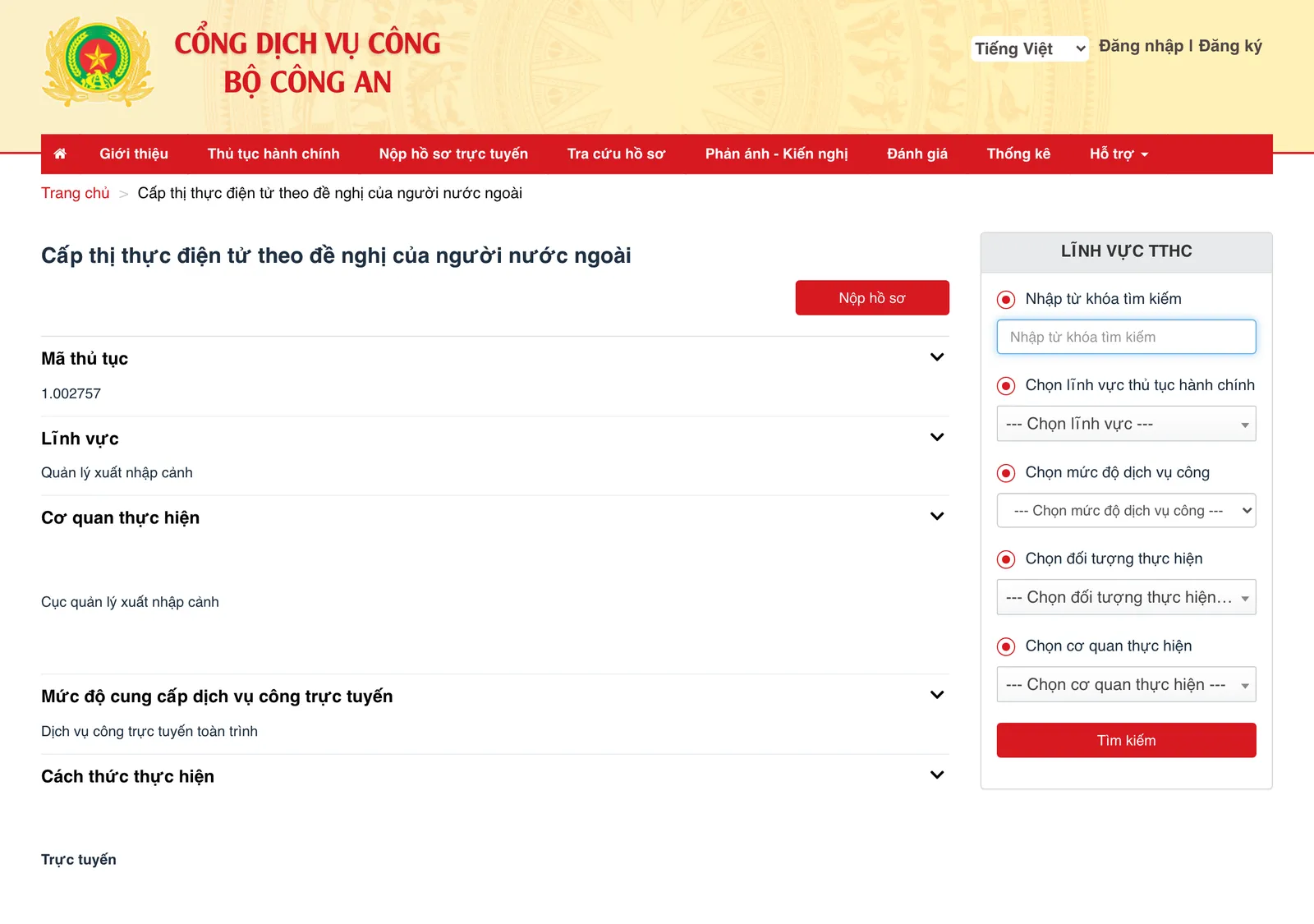
E-visas are granted to citizens of all countries and territories. For an online application the processing time is no more than 3 working days from a complete application and the fee.
Resolution 389/NQ-CP added border gates to the e-visa list from its signing date, 2 December 2025. It adds Long Thanh International Airport once the airport is put into operation. It adds Gia Binh International Airport on the same condition.
Tan Son Nhat Airport is already on the portal’s list of air gates. Steps and fees are in the Vietnam e-visa guide for Ho Chi Minh City.
Law 118/2025: in force since 1 July 2026
Law 118/2025/QH15 has applied since 1 July 2026, except the provision in clause 2 of that article. It amends the law on entry, exit, transit and residence of foreigners.
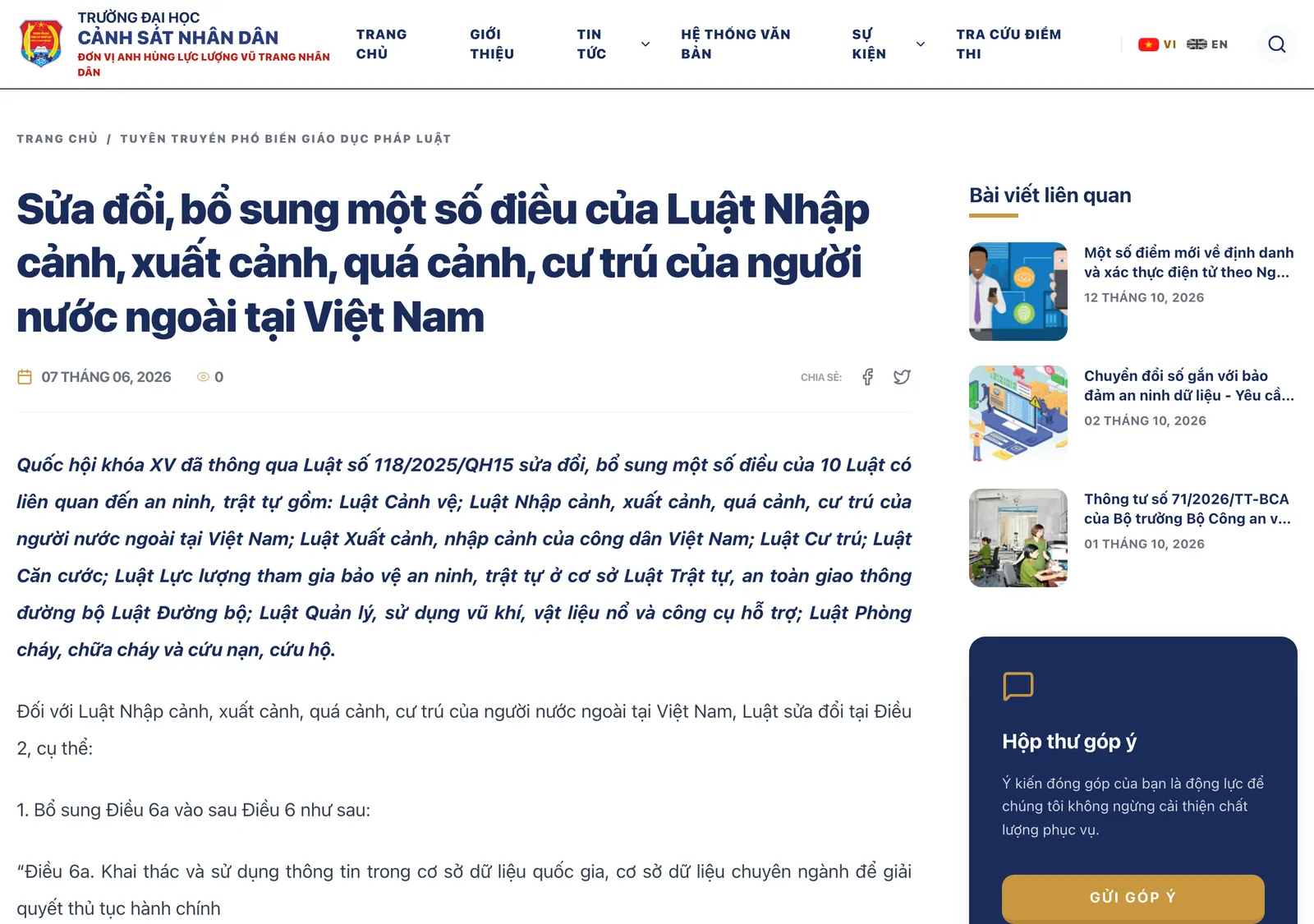
- New symbols. UD1 is for high-quality digital-technology-industry workforce and other preferential cases. UD2 is for their spouse or a child under 18. Both are valid up to 5 years.
- Residence cards. UD1 and UD2 holders become eligible for a temporary residence card. A card marked DT1, UD1 or UD2 is valid up to 10 years.
- Who files. The inviting agency, organisation or individual files the visa request at the immigration authority, or by post or electronically if it meets set conditions.
- Sponsors. A Vietnamese grandparent who permanently resides in Vietnam may sponsor a foreign grandchild to visit.
- Paperwork. The law repeals the rule on paying the charge for sending a visa notification.
Form NA5, the visa and extension application form, was also revised by Circular 70/2026/TT-BCA, in force from 1 July 2026.
Visa fees from 1 April 2026
Circular 28/2026/TT-BTC has applied since 1 April 2026 and replaces Circular 25/2021/TT-BTC. A single-entry visa costs US$25. A multiple-entry visa valid up to 90 days costs US$50.
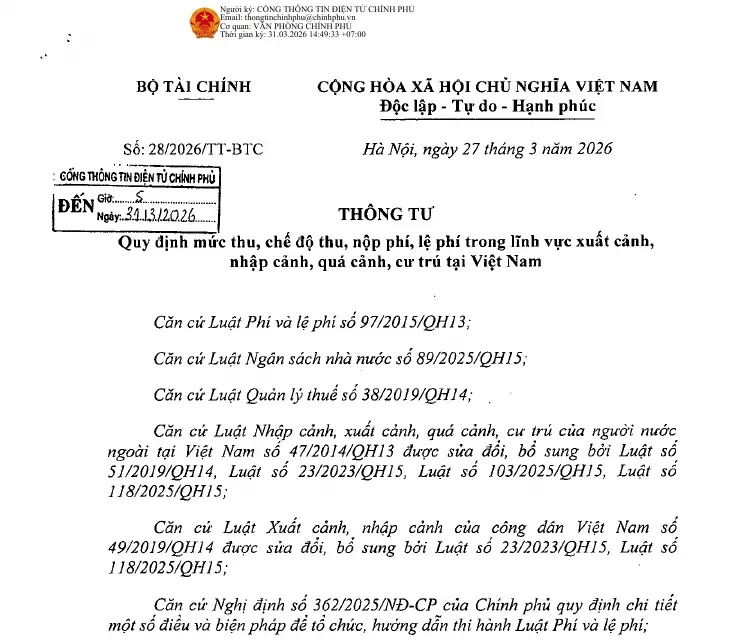
Each temporary-stay extension costs US$10. Cards, certificates and longer visas are in the full table in Vietnam immigration fees.
Overstay fines under Decree 282/2025
Decree 282/2025/NĐ-CP replaces Decree 144/2021/NĐ-CP and took effect on 15 December 2025.
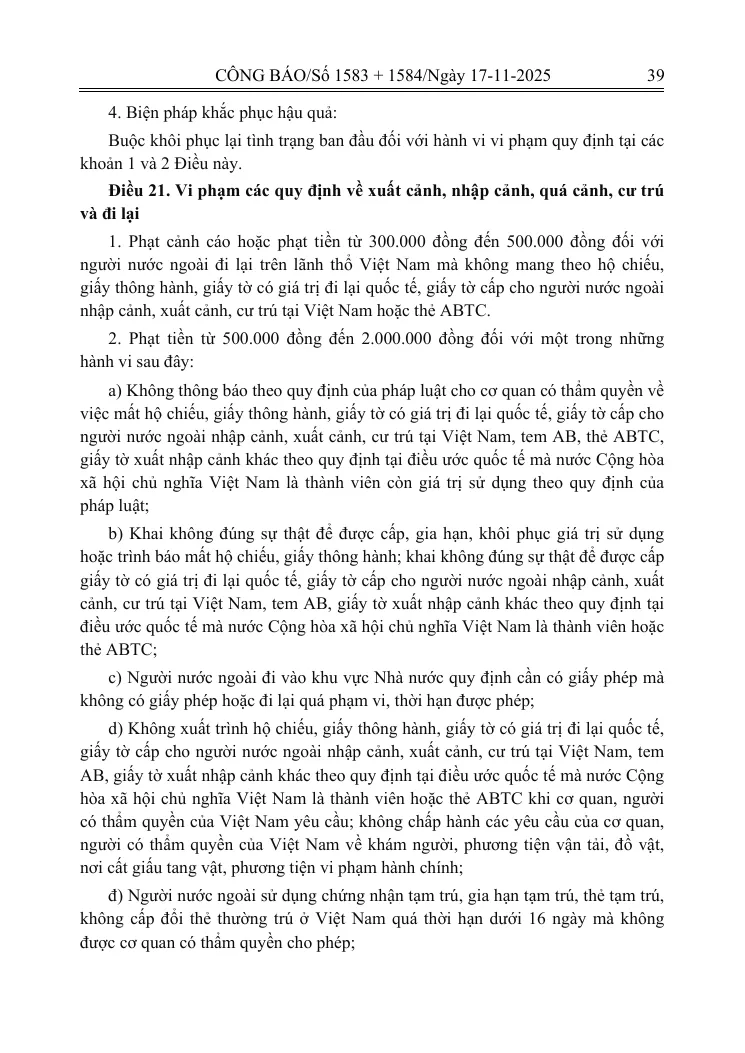
For an individual the bands run from 500,000 to 2,000,000 VND for under 16 days up to 30,000,000 to 40,000,000 VND for 1 year or more. Deportation may be added for an overstay of 16 days or more. A sponsoring organisation found responsible is fined at double the individual rate. Every band is in the overstay fines guide.
Declaring your stay: Circular 87/2026
Circular 87/2026/TT-BCA has applied since 24 July 2026 and replaces Circular 53/2016/TT-BCA. An electronic declaration must be filed the moment the foreigner arrives at the accommodation.
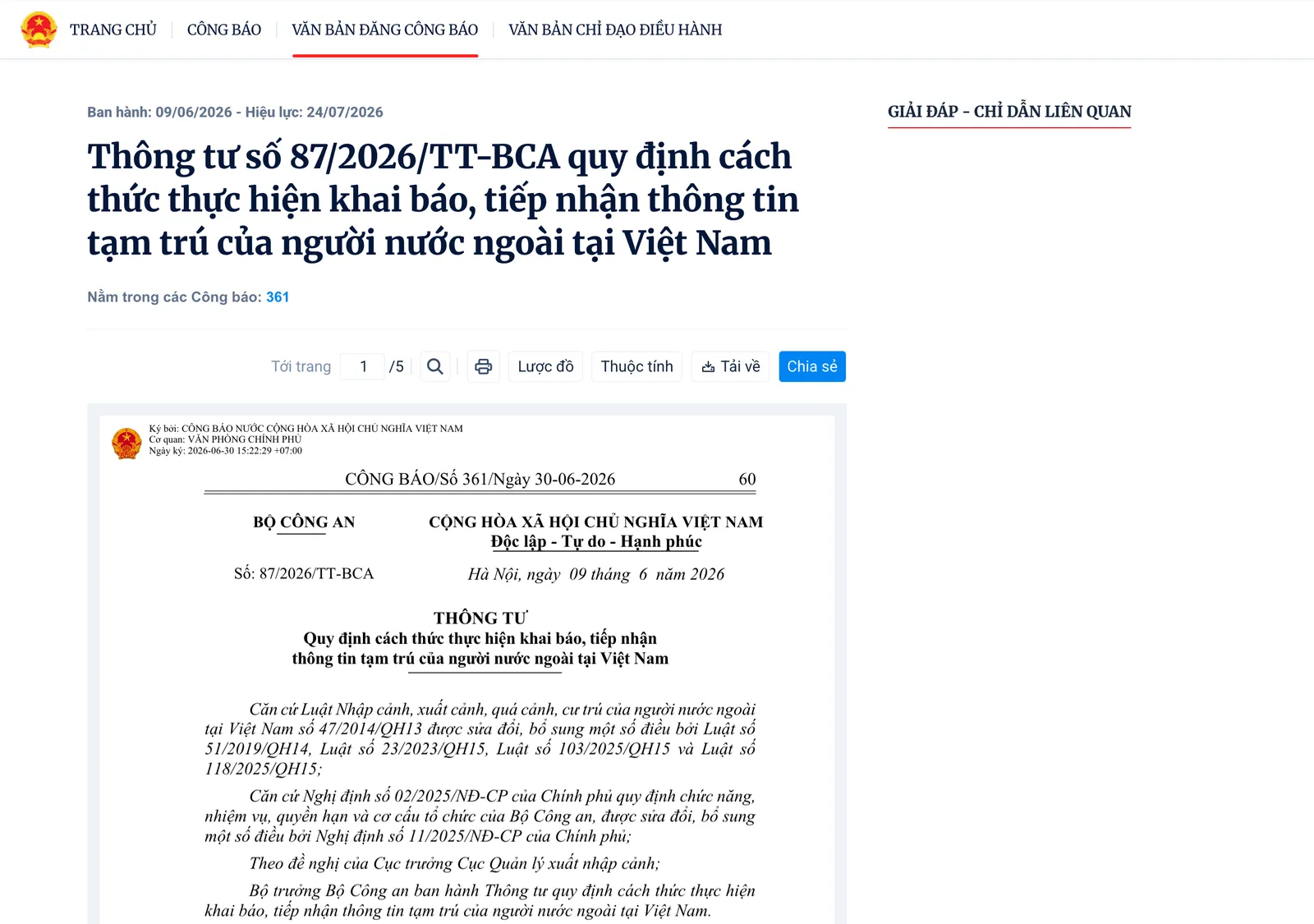
The accommodation declares the stay, electronically or on paper. The declarant is its owner, legal representative or an authorised person, not the guest. Commune-level police accept electronic declarations around the clock, seven days a week. See registering temporary residence.
Work permits and work fines
Decree 219/2025/NĐ-CP took effect on 7 August 2025 and replaces Decree 152/2020/NĐ-CP. Digital-technology-industry workforce, as the law on that industry defines it, is a work-permit exemption applying from 1 January 2026.
Decree 283/2026/NĐ-CP took effect on 10 September 2026 and replaces the old fine schedule under Decree 12/2022/NĐ-CP. A foreign worker who works without a permit or exemption certificate, or with an expired one, is fined VND 15-25 million.
Arriving at Tan Son Nhat: the pre-arrival declaration
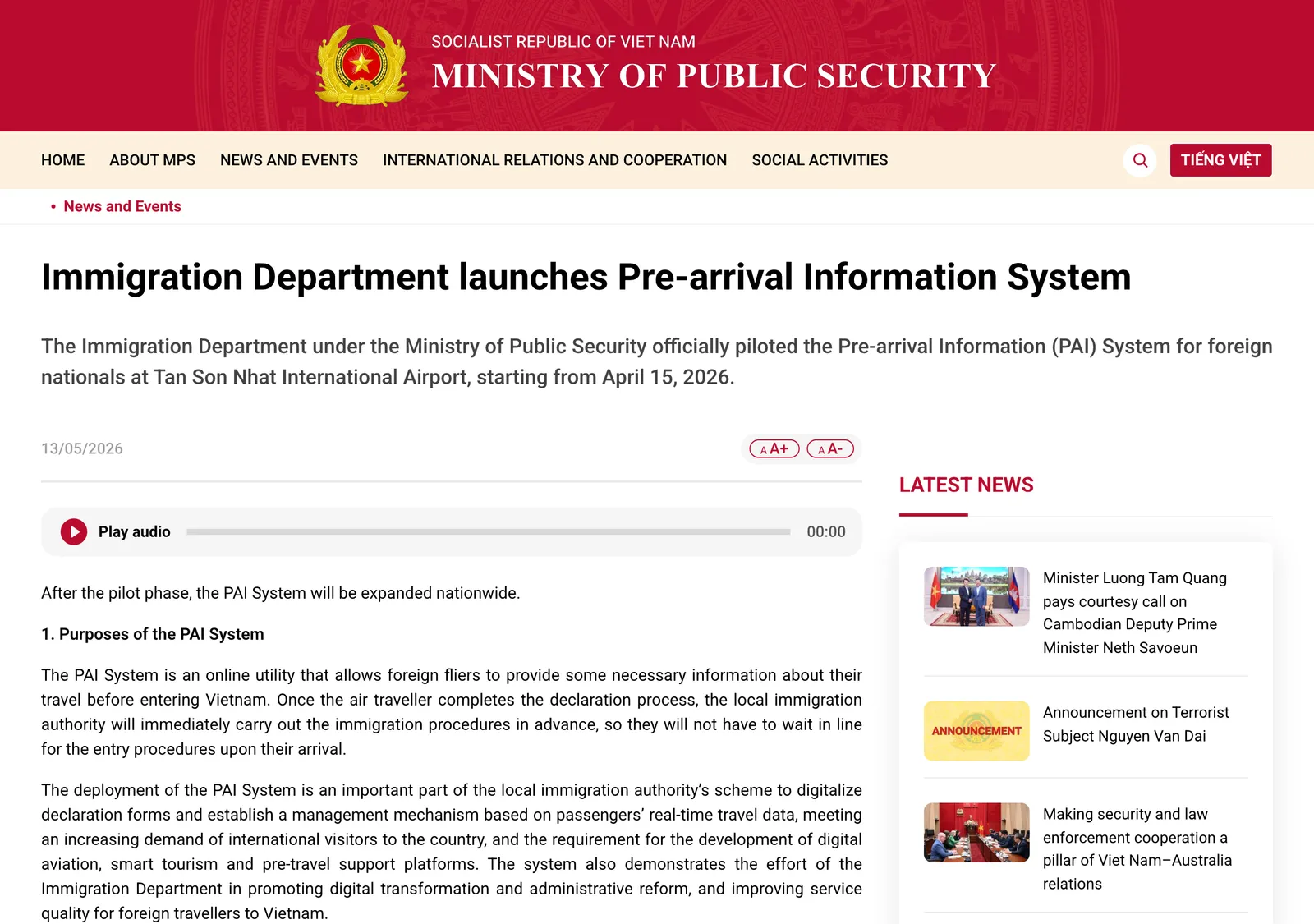
The Immigration Department piloted the Pre-arrival Information (PAI) System for foreign nationals at Tan Son Nhat International Airport from 15 April 2026. You can submit from any internet-connected device within three days before entry.
A notice dated 18 June 2026 on a Vietnamese embassy site says the pilot is encouraged, not compulsory. A U.S. Embassy notice dated 17 June 2026 calls the declaration mandatory and says it is expanding to all airports in Vietnam. The notices disagree, so file it either way.
If you arrive without it, the U.S. Embassy notice says the declaration is also available on arrival by QR code or paper form. Some declarations fail because of mistakes with the flight number and the Passenger Name Record data.
Authorities found fake websites impersonating the system. Go to prearrival.immigration.gov.vn. The e-visa guide walks through arrival step by step. The extension guide covers staying longer, and the visa hub lists every guide.
Not confirmed: Whether the pre-arrival declaration is compulsory. A Vietnamese embassy notice of 18 June 2026 says encouraged, not compulsory. A U.S. Embassy notice of 17 June 2026 says mandatory.
Common questions
What are the new visa rules for Vietnam in 2026?
Law 118/2025 has applied since 1 July 2026. Circular 28/2026 set new visa fees from 1 April 2026. Decree 282/2025 sets the overstay fines from 15 December 2025. Circular 87/2026 on stay declarations has applied since 24 July 2026.
Which countries get visa-free entry to Vietnam?
Two Government resolutions grant 45 days from entry. Resolution 44/NQ-CP covers Germany, France, Italy, Spain, the United Kingdom, Russia, Japan, South Korea, Denmark, Sweden, Norway and Finland. Resolution 229/NQ-CP covers Belgium, Bulgaria, Croatia, Czechia, Hungary, Luxembourg, the Netherlands, Poland, Romania, Slovakia, Slovenia and Switzerland, for tourism only.
How much does a Vietnam visa cost in 2026?
A single-entry visa costs US$25. A multiple-entry visa valid up to 90 days costs US$50. The fee circular took effect on 1 April 2026.
Is the pre-arrival declaration at Tan Son Nhat compulsory?
A Vietnamese embassy notice of 18 June 2026 says the Tan Son Nhat pilot is encouraged, not compulsory. A U.S. Embassy notice of 17 June 2026 calls the declaration mandatory. Under either reading you can file within three days before entry.
Can a grandparent sponsor a foreign grandchild?
Law 118/2025 lets a Vietnamese citizen who permanently resides in Vietnam and is a grandparent invite or sponsor a foreign grandchild to visit.
What is the fine for overstaying a visa in 2026?
Under 16 days is fined 500,000 to 2,000,000 VND. One year or more is fined 30,000,000 to 40,000,000 VND. Deportation may be added for an overstay of 16 days or more.
Who declares my stay when I rent a flat or book a hotel?
The accommodation declares a foreign guest's temporary residence, electronically or on paper. The declaration is filed by its owner, legal representative or an authorised person.
Read next
General information checked against the sources listed above, not legal advice for your situation. Rules and office practice change; confirm with the immigration office or a licensed adviser before you act. See how guides are checked.
Spotted an error? Report it.