Birth Registration in Ho Chi Minh City: Ward, Fee, Deadline
A birth with a foreign parent is registered at the ward People's Committee, since the district level handed its civil-status tasks to the commune level. The father or mother files within 60 days of the birth. Filing online costs 0 dong. On paper the schedule is 75,000 dong, and registration for a child is exempt.
On this page
- Which office registers a foreign-element birth
- Where to file in Ho Chi Minh City
- Steps to register the birth
- The 60-day deadline and who registers
- Documents to bring
- Nationality: the parents’ agreement
- Unmarried parents: recording the father
- What the birth certificate records
- Fees
- How long it takes
- Your baby’s visa and residence card
- What changes from 1 March 2027
- Do not give false information
- Checklist before you go
- Read next
- Step by step
- Common questions
Since 1 July 2025 the ward registers births, not the district.
A baby with a foreign parent is registered at the ward People’s Committee (Ủy ban nhân dân phường) where a parent lives. The father or mother must file within 60 days of the birth.
Which office registers a foreign-element birth
The 2014 Civil Status Law still names the district-level committee for these births. Decree 120/2025/NĐ-CP moves that power down to the ward.
Ủy ban nhân dân xã, phường, đặc khu thực hiện thẩm quyền đăng ký hộ tịch quy định tại khoản 2 Điều 7, Chương III của Luật Hộ tịch năm 2014
The commune-level People’s Committee, meaning a commune, ward or special zone, exercises the registration powers in clause 2 of Article 7 and in Chapter III of the 2014 Law. Nghị định 120/2025/NĐ-CP, Điều 4 khoản 1
The decree’s annex hands the district committee’s tasks in these procedures to the commune-level committee. Registering a birth sits in Chapter III of the 2014 Law, which is titled for the district level.
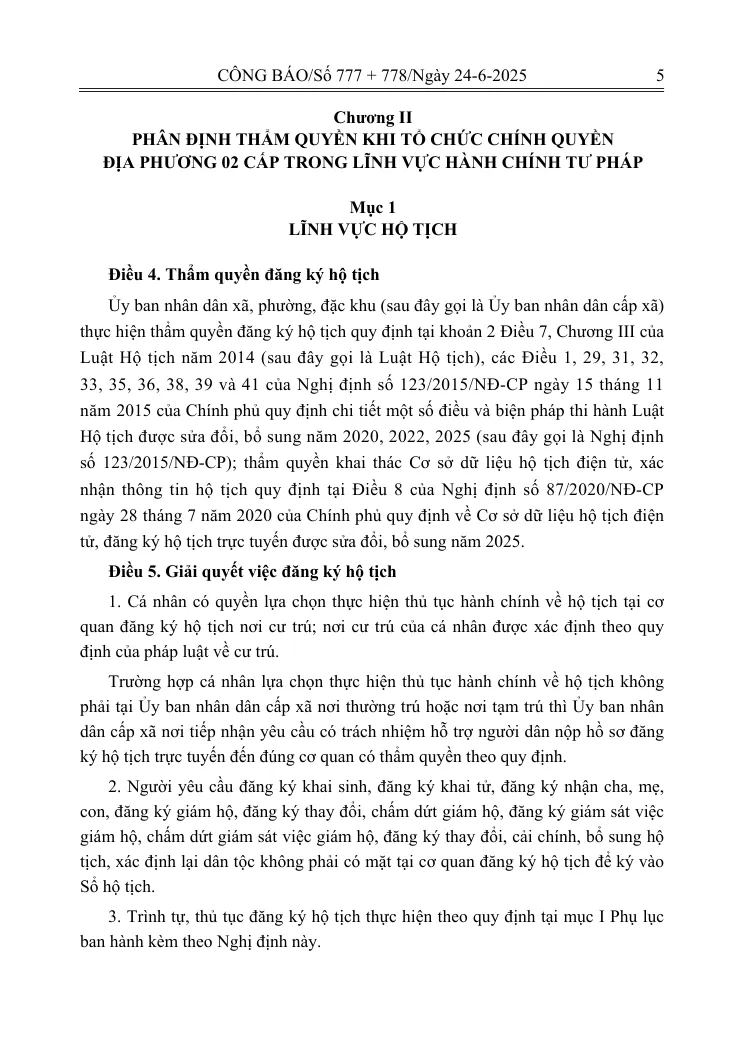
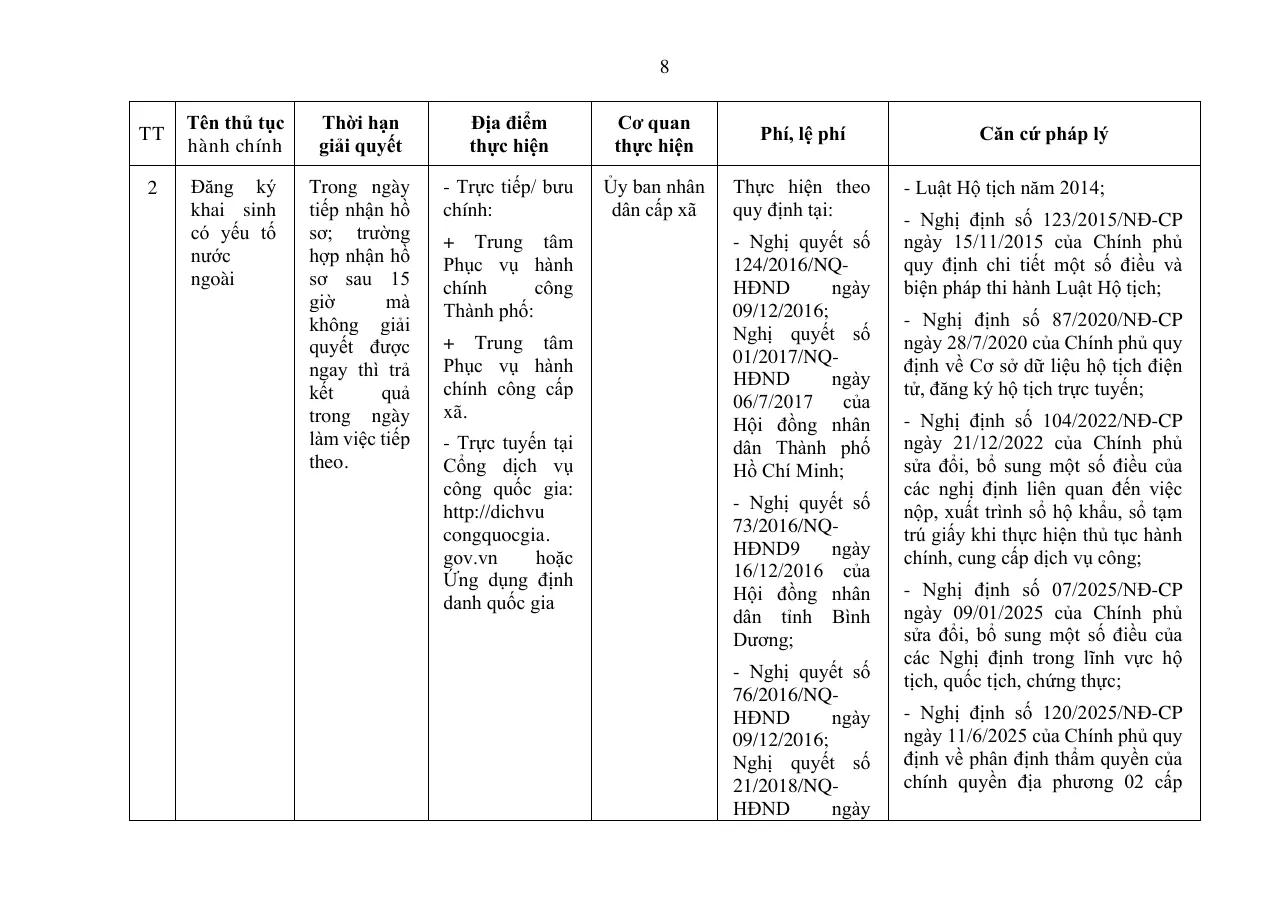
The city’s list puts it at ward level too. On 23 February 2026 the city published a decision with a list of 35 amended civil-status procedures. Part I of the list covers procedures within the authority of the commune level.
Item 2 in Part I is birth registration with a foreign element (Đăng ký khai sinh có yếu tố nước ngoài). The decision took effect on the day it was signed.
Where to file in Ho Chi Minh City
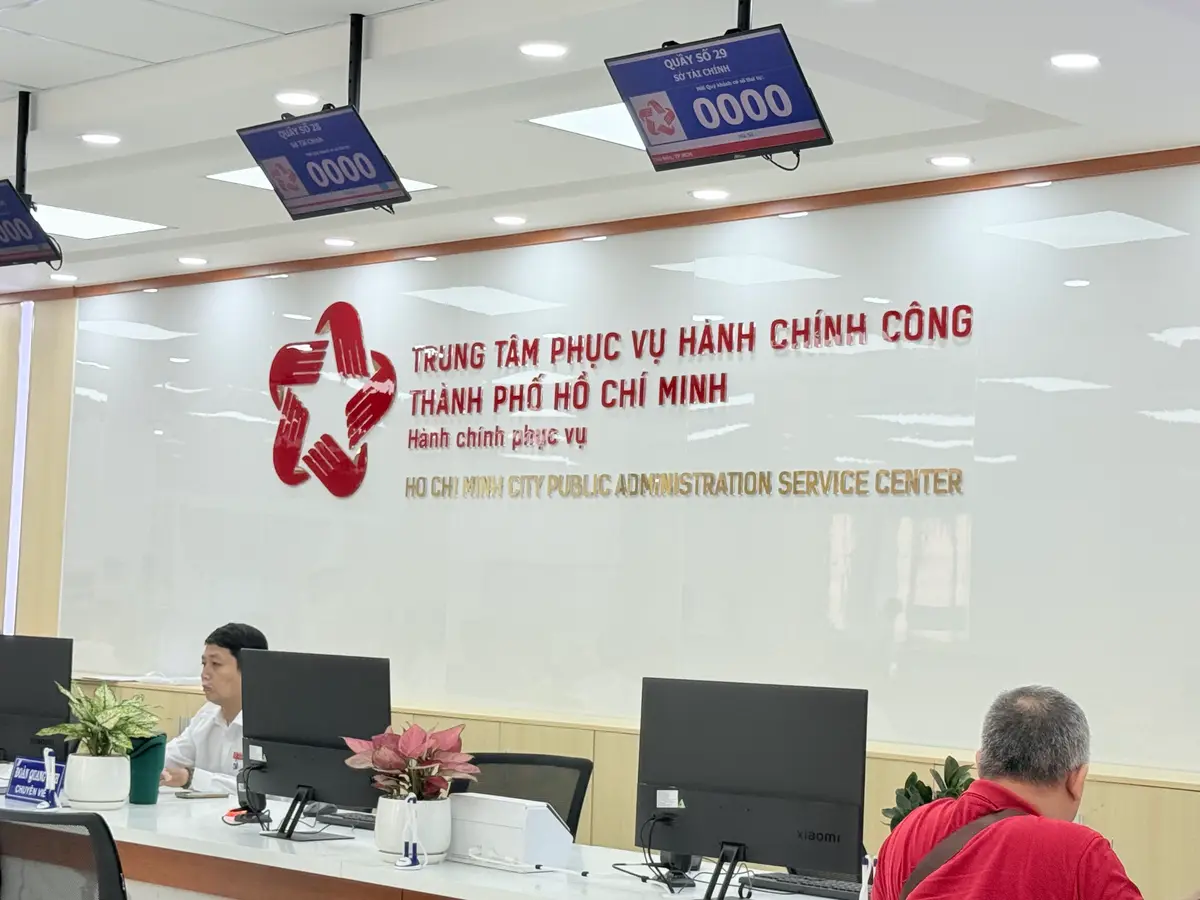
For a ward-level procedure you may file in person or by post at the ward’s public service centre, or at the city Public Service Centre. You can also file online on the national public-service portal or the national ID app.
The city Public Service Centre is at 43 Nguyen Van Ba, Thu Duc. Ho Chi Minh City has 168 commune-level units, and your ward is the one where a parent lives.
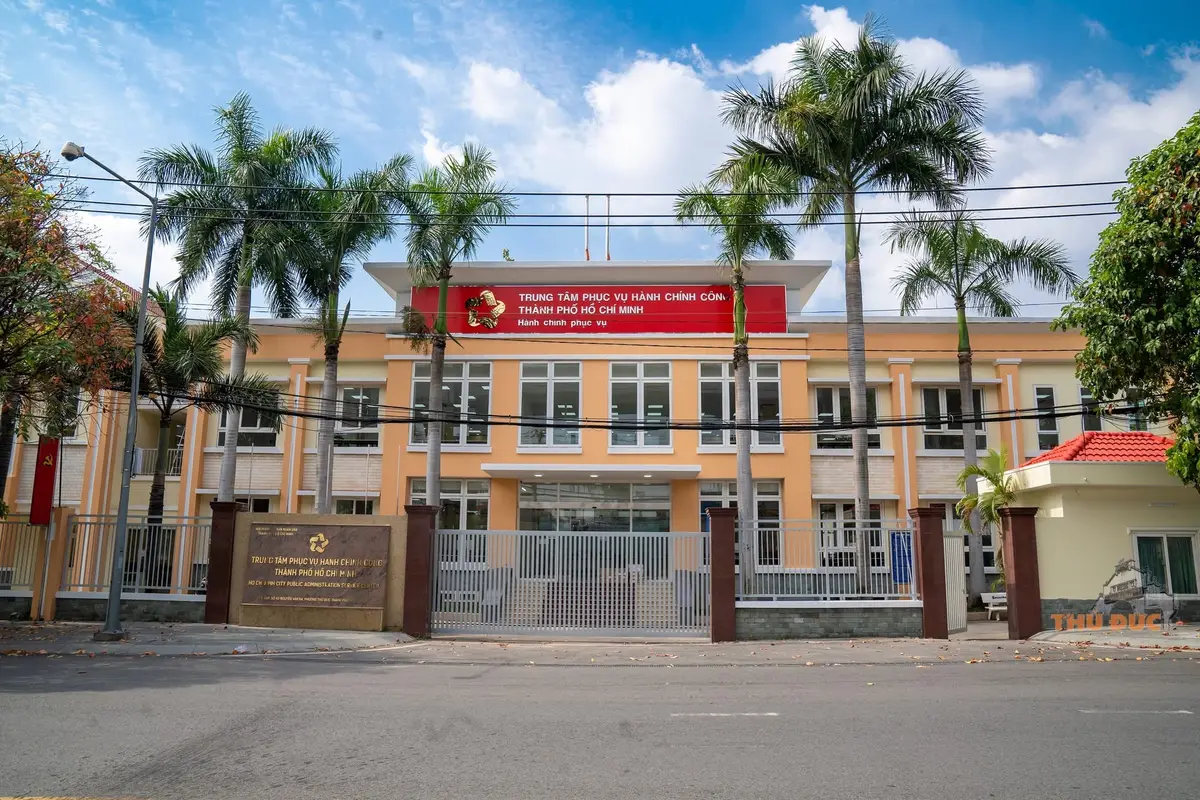
43 D. Nguyen Van Ba, phuong, Thu Duc, Ho Chi Minh, Vietnam · Open in Google Maps (opens in a new tab)
Choosing a ward
A person has the right to carry out civil-status procedures at the registration office of the place of residence. Residence follows the residence law.
If you pick a ward that is not your permanent or temporary residence, the committee that receives the request must help you file online to the competent authority.
When the Department of Justice is involved
The provincial Department of Justice is not where a normal birth file goes. The decree gives it a role in one case, in its transitional clause.
Where the competent ward cannot be identified, or the person has no residence in Vietnam, the Department receives the request. A visitor with no residence in Vietnam falls in the second case.
A parent with a registered residence files at the ward of that residence. Within 2 working days it reports to the city People’s Committee chairman, who assigns a suitable ward. The Department then tells you which ward to file with.
The Department of Justice is at 141-143 Pasteur, Xuan Hoa Ward. Its Civil Status and Nationality Division is on 028.38297052, extension 146 or 115.
Steps to register the birth
- Get the Birth Notification (Giấy chứng sinh) from the hospital or birth facility.
- Fill in the declaration in the prescribed form.
- If a parent is foreign, add the parents’ written agreement on the child’s nationality.
- Show your original passport or another valid photo ID, and give its number and issue date.
- File at the ward service centre or the city centre, or online.
- Receive the result: the city list sets the foreign-element birth for the day the file is received.
The 60-day deadline and who registers
The father or mother is responsible for registering within 60 days of the birth. If the parents cannot, a grandparent, another close relative or the individual or organisation caring for the child must do it.
The People’s Committee of the father’s or mother’s place of residence registers the birth of a child born in Vietnam when both parents are foreign or stateless. The same applies when one parent is a Vietnamese citizen and the other is foreign or stateless.
A child born abroad and not yet registered, who now lives in Vietnam, is covered when one or both parents are Vietnamese citizens. A person who already holds records or papers uses a separate item in the list.
Documents to bring
The person registering submits the declaration and the Birth Notification. The Birth Notification is not needed on paper if the hospital’s electronic copy was already submitted or the registry obtained its signed electronic data.
If a parent is foreign, add a written agreement of the parents on the child’s nationality. If the parents pick a foreign nationality, a competent foreign authority of that country must confirm the agreement.
The person registering shows the original passport or another valid photo ID issued by a competent authority. Give its number and issue date, and the registry checks it in the electronic civil-status and population databases. If the parents have registered their marriage, the registry looks up their marital status in the electronic databases from the marriage-certificate details in your declaration.
If there is no Birth Notification
Submit a statement of a witness who confirms the birth. If there is no witness, a sworn statement about the birth is required instead.
Foreign papers: legalising and translating
Foreign documents must be consularly legalised to be used in Vietnam, except in the cases in Article 9 of Decree 111/2011/NĐ-CP. A document is exempt when a treaty or reciprocity provides for it, when Vietnamese law exempts it, or when authorities exchange it directly.
Legalisation applies to foreign documents you hand in, such as the foreign authority’s confirmation of the nationality choice. A document in a foreign language must be translated into Vietnamese, with the translation notarised or the translator’s signature certified.
Nationality: the parents’ agreement
A child has Vietnamese nationality if the parents agree to choose it when the birth is registered. Take the rule that fits your family from the list below.
If one parent is Vietnamese and the other is stateless
The child has Vietnamese nationality, whether born in or outside Vietnam. The same holds when the mother is Vietnamese and the father is unknown.
If the baby is born in Vietnam and the parents cannot agree
The child still has Vietnamese nationality, and one parent writes a declaration that the parents could not agree.
If both parents are foreign
The parents file a written agreement on the child’s nationality. A foreign nationality needs the foreign authority’s confirmation of that agreement.
If the child already holds a foreign nationality
A child already registered abroad also has Vietnamese nationality if the parents choose it when the birth is recorded. Keeping the foreign nationality must be consistent with that country’s law, and the parents submit a declaration to that effect.
A child with both nationalities may have a combined name mixing a Vietnamese and a foreign name.
If both parents are stateless
A child born in Vietnam whose parents are both stateless, with a place of permanent residence in Vietnam, has Vietnamese nationality.
Unmarried parents: recording the father
Acknowledgement of a parent or child between foreigners falls within Vietnamese authority only where one or both parties have permanent residence in Vietnam. The city list has a combined item, birth registration together with acknowledgement of a parent or child with a foreign element.
The person files the declaration and papers, objects or other evidence that prove the relationship. A foreigner also files a copy of the passport or an equivalent document.
The officer verifies the case within 15 days of the full papers and posts the acknowledgement for 7 consecutive days. The parties must be present at registration. The list gives 10 working days for this procedure.
What the birth certificate records
Birth registration records the child’s full name, sex, date of birth, place of birth, home village, ethnicity and nationality. It also records the parents’ full names, year of birth, ethnicity, nationality and place of residence.
The record includes the child’s personal identification number. When the birth is recorded, the registrar updates the electronic civil-status database and the national population database to obtain it.
If the child holds a foreign nationality, the nationality item is not recorded in the register.
Fees
| Item | Fee |
|---|---|
| Foreign-element birth, filed online | 0 dong |
| Foreign-element birth, filed in person | 75,000 dong |
| Registration for a child | Exempt |
| Copy of the birth certificate, if requested | 8,000 dong per copy |
| Copy of a registered extract from the database | 8,000 dong per copy per event |
The 75,000 dong figure is the city’s schedule in force since 19 June 2026. It applies to in-person and postal filing, and the ward collects it.
The resolution exempts civil-status registration for children, people in poor households, the elderly, people with disabilities and people from families with revolutionary merit. A baby’s registration therefore falls in the exempt group. The law also waives fees for on-time birth registration of Vietnamese citizens living in Vietnam.
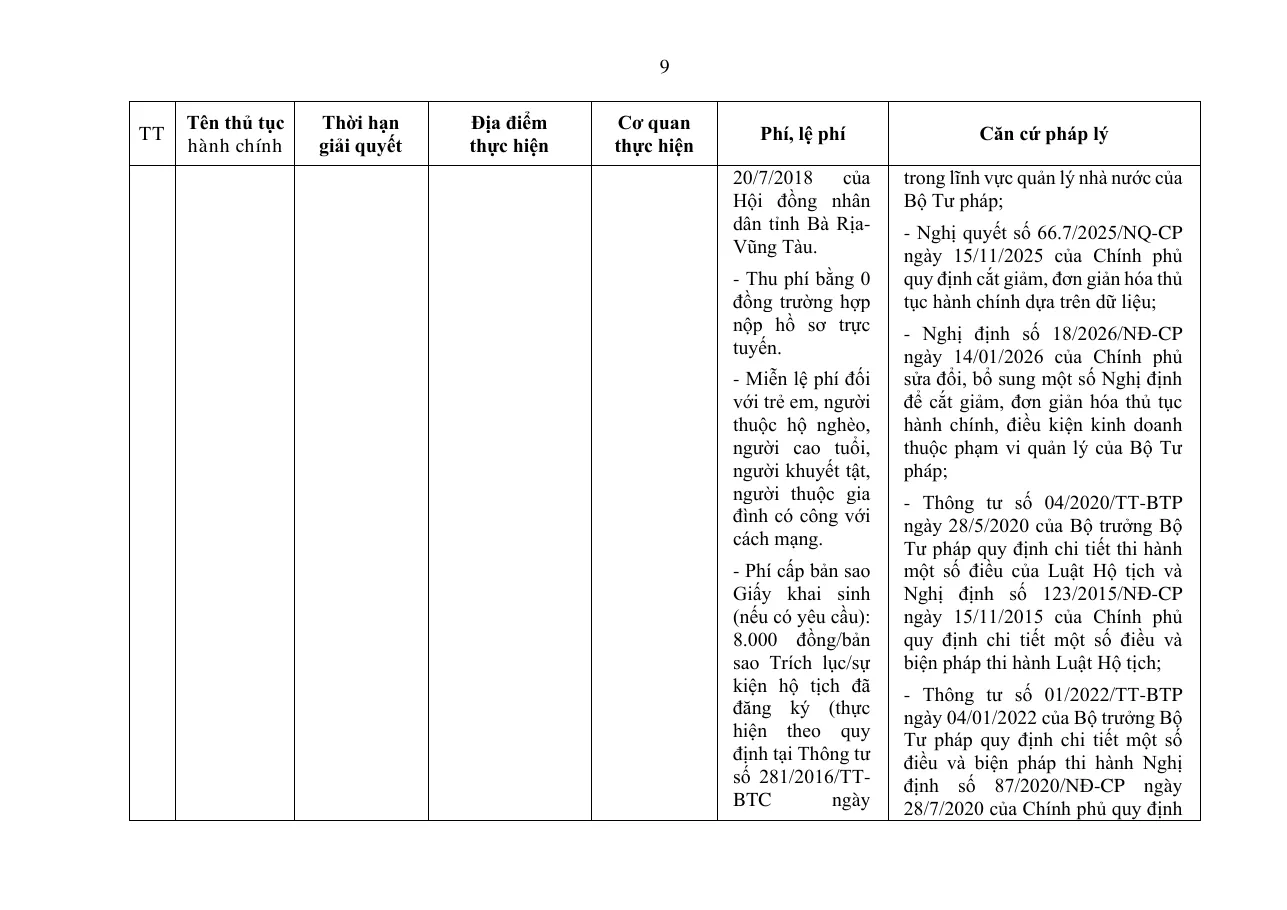
Anyone requesting an event outside the exemptions, or a certified extract, pays the civil-status fee. Copies come from the Department of Justice or the ward People’s Committee.
How long it takes
The city list sets the foreign-element birth for the day the file is received. If the file arrives after 15:00 and cannot be settled at once, the result comes the next working day.
Re-registering a birth with a foreign element takes 5 working days, or no more than 25 days where a written verification is needed. Registering a person who already has records or papers has its own item.
Your baby’s visa and residence card
A visa is issued to each person. A child under 14 who shares a passport with a parent gets a visa together with that parent.
A visa for a child under 14 costs US$25, whatever its validity period. A TT visa is issued to a child under 18 of a foreigner who holds one of the work, investor, study or press visa types listed in the law. The visa types guide explains the symbols.
A residence card’s validity must be at least 30 days shorter than the remaining validity of the holder’s passport. See the temporary residence card guide and the immigration fees guide.
What changes from 1 March 2027
The new Civil Status Law takes effect on 1 March 2027. The current Law 60/2014/QH13 expires on that date. A baby born now is registered under the rules above.
Hồ sơ đăng ký hộ tịch được tiếp nhận trước ngày Luật này có hiệu lực thi hành mà chưa giải quyết xong thì tiếp tục được giải quyết theo quy định của pháp luật về hộ tịch tại thời điểm tiếp nhận.
A civil-status file received before the law takes effect and not yet finished continues to be handled under the rules in force when it was received. Luật Hộ tịch 2026, Điều 30
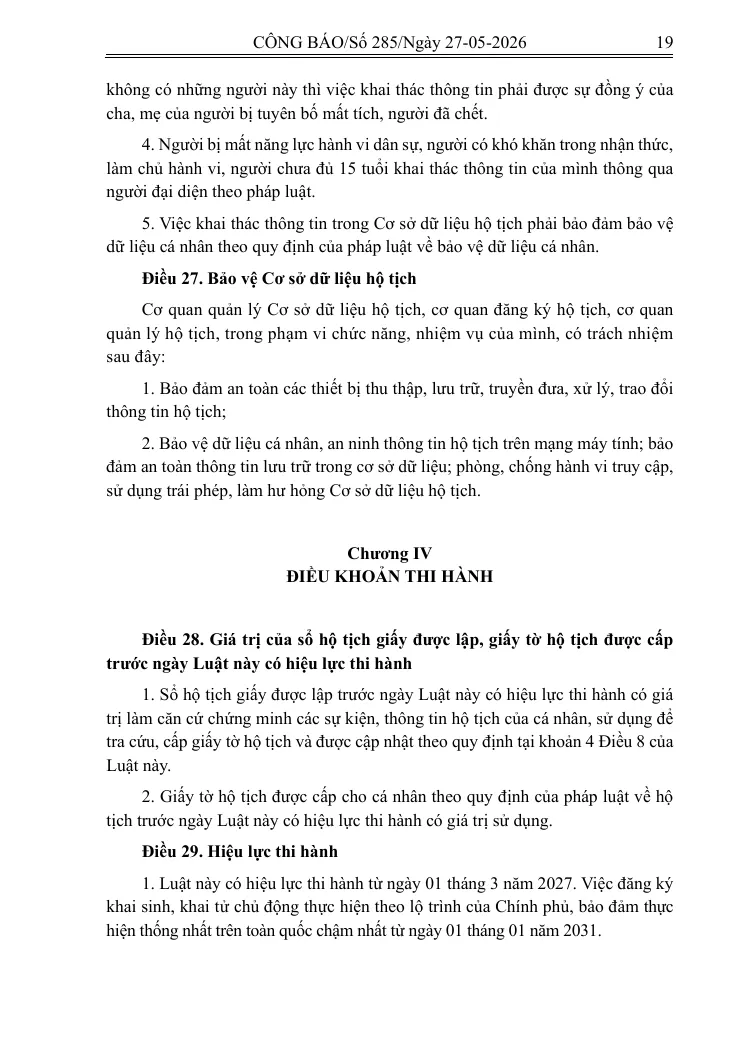
Under the new law the ward registers civil-status events regardless of the person’s place of residence. The father or mother is still responsible for registering within 60 days.
A person may file online, by post or in person. If the parents cannot register, the grandparents, a full sibling, a paternal or maternal uncle or aunt, or the individual or organisation raising the child must do it.
At the applicant’s choice, the ward must register a birth on its own initiative when the hospital’s data links automatically to the civil-status system. That proactive registration follows a Government roadmap and must be in place nationwide by 1 January 2031 at the latest.
Birth registration results will be issued as a paper and an electronic copy. The ward chairperson may delegate signing of civil-status papers except the birth certificate and papers for registrations with a foreign element. The Government sets the detailed rules for Articles 7 to 10, 14 and 15 to 27.
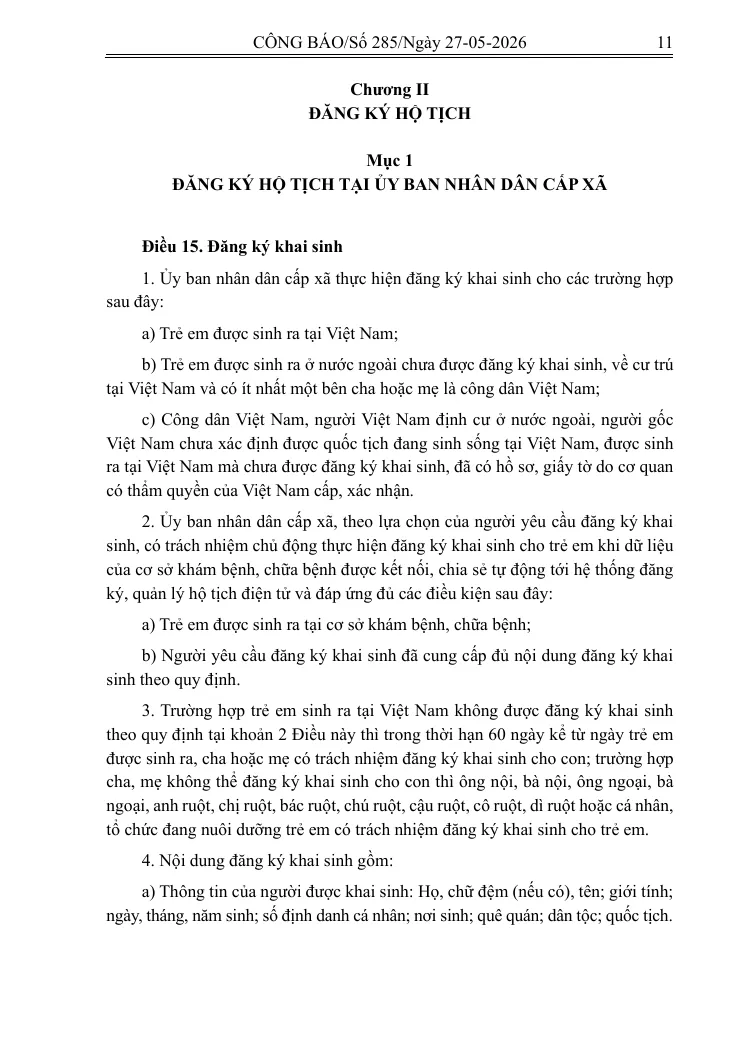
Decree 120/2025/NĐ-CP stops having effect on 1 March 2027, apart from the cases listed in the same clause.
Do not give false information
Giving false information or documents, or making or using forged or another person’s documents to register a civil-status event, is prohibited. A false sworn statement or false witness is prohibited. Offering bribes or promising benefits is prohibited.
Papers issued for a registration that breaks these rules are cancelled. A person who commits a prohibited act may face an administrative penalty or criminal liability.
Checklist before you go
- Birth Notification from the hospital, or a witness or sworn statement.
- Declaration in the prescribed form.
- Original passport or other valid photo ID, with number and issue date.
- For a foreign parent, the written agreement on nationality.
- Foreign papers legalised and translated into Vietnamese.
- Ward chosen; online filing if you prefer 0 dong.
Read next
- Register temporary residence for the ward where you live.
- Temporary residence card for a baby who stays.
- Marriage registration at the same ward office.
- Spouse visa guide for the TT visa route.
- Ho Chi Minh City with kids once the paperwork is done.
- International schools for later.
Photos and clips uploaded to Google Maps (Ho Chi Minh City Public Administration Service Centre on Google Maps (opens in a new tab)) by Qui Huynh, LUU DUONG THI QUYNH.
Step by step
- Get the Birth Notification from the hospitalThe person registering submits the Birth Notification or a document that replaces it.
- Choose the wardYou may carry out the procedure at the registration office of your place of residence.
- Fill in the declarationSubmit the declaration in the prescribed form together with the Birth Notification.
- Add the foreign-parent papersIf a parent is foreign, add the parents' written agreement on the child's nationality.
- File online or at a counterFile at the ward service centre or the city centre, or online.
- Collect the birth certificateThe city list sets the foreign-element birth for the day the file is received.
Not confirmed: If a ward counter charges for a baby's registration, point to the city fee resolution of 19 June 2026: it exempts civil-status registration for children.
Common questions
Which office registers a baby born in Ho Chi Minh City to a foreign parent?
The ward People's Committee of the parents' place of residence. The city's list of civil-status procedures names the commune-level body for the foreign-element birth.
Is the Department of Justice involved?
Not when a parent lives in Vietnam. The decree's transitional clause gives it the request where the competent ward cannot be identified or the person has no residence in Vietnam, which is the visitor's case.
How long do I have to register the birth?
The father or mother is responsible for registering within 60 days of the birth. If they cannot, a grandparent, another close relative or the carer must do it.
How fast is the registration?
The city list sets the foreign-element birth for the same day the file is received. A file that arrives after 15:00 and cannot be settled at once gets its result the next working day.
Does it cost anything?
Filing online is 0 dong. In person the city's fee schedule sets 75,000 dong for a foreign-element birth. Registration for a child is exempt, so a baby's registration is fee-free on the text.
What does the baby's nationality depend on?
On the parents' agreement when the birth is registered. A child with one Vietnamese parent and one stateless parent has Vietnamese nationality.
Do foreign papers need legalising?
Foreign documents must be consularly legalised unless a treaty, reciprocity or Vietnamese law exempts them. A foreign-language document must also be translated into Vietnamese.
Does the baby need a visa?
A visa is issued to each person, but a child under 14 who shares a parent's passport gets a visa together with that parent. A visa for a child under 14 costs US$25.
Which ID does a foreign parent show?
The original passport, or another valid photo ID issued by a competent authority. You give its number and issue date, and the registry checks it in its databases.
Which rules apply to a baby born now?
The rules in this guide. The new Civil Status Law takes effect on 1 March 2027 and replaces Law 60/2014/QH13. A file received before that date is finished under the rules in force when it was received.
Read next
General information checked against the sources listed above, not legal advice for your situation. Rules and office practice change; confirm with the immigration office or a licensed adviser before you act. See how guides are checked.
Spotted an error? Report it.